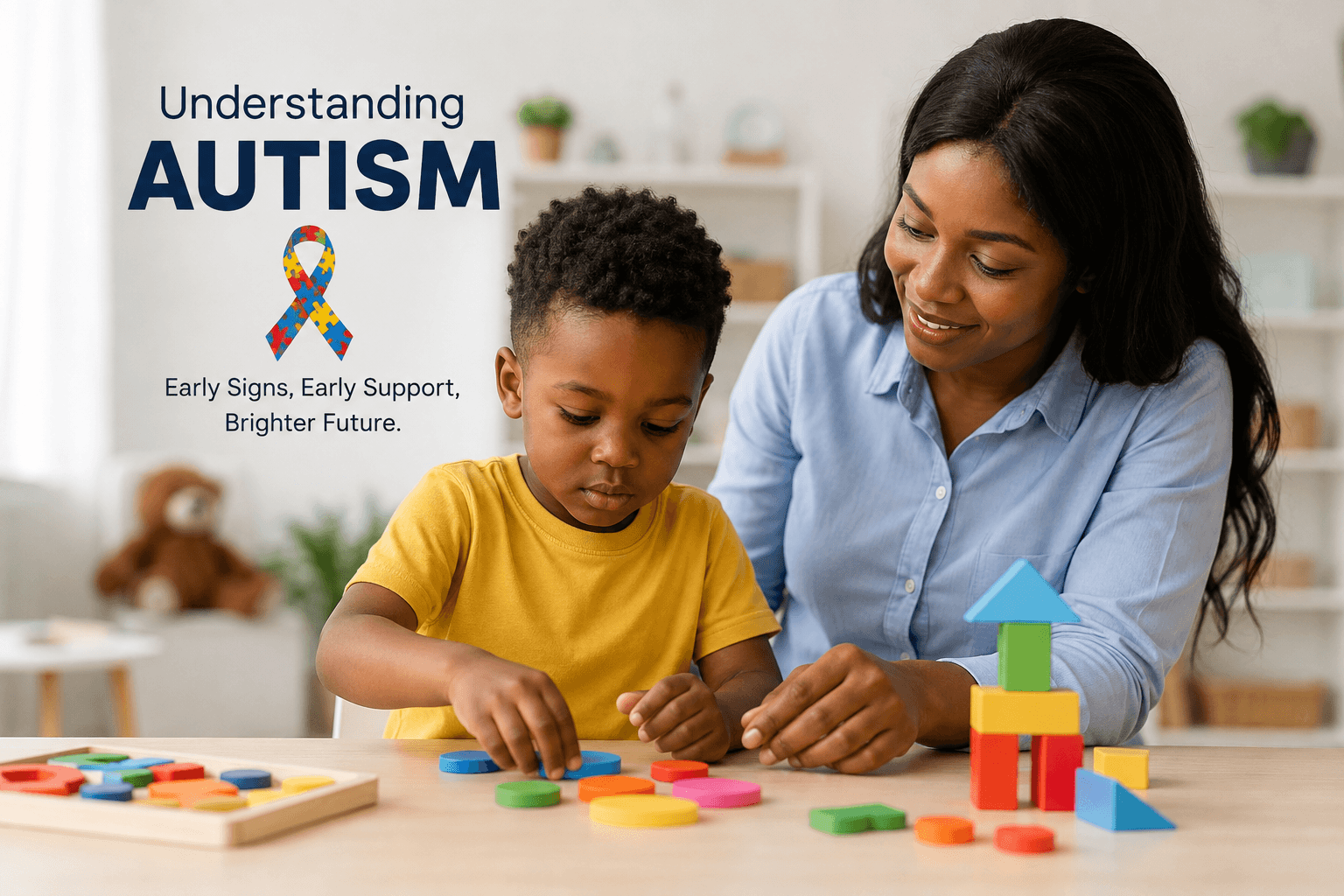
For many parents, the first signs can be subtle. A child may not respond consistently when their name is called, may take longer than expected to begin speaking, or may avoid the kind of eye contact and social interaction typically seen among children of a similar age.
On their own, these behaviours do not necessarily mean a child has autism. But recognising possible developmental differences early and seeking professional assessment can make an important difference in the support a child receives.
Dr Usman Ibrahim, a Senior Registrar in Paediatrics at Lagos University Teaching Hospital (LUTH), has emphasised the importance of early diagnosis and intervention for children with Autism Spectrum Disorder (ASD).
Understanding Autism Spectrum Disorder
Autism Spectrum Disorder is a neurodevelopmental condition that can affect communication, social interaction, behaviour and the way a person responds to their surroundings.
The word “spectrum” is important because autism does not present in exactly the same way in every person. Some autistic children may require considerable support with communication and everyday activities, while others may have relatively mild challenges that are not recognised until much later in life.
Ibrahim explained that autism should not simply be viewed as an intellectual disability or general developmental delay.
According to World Health Organization estimates cited by the paediatrician, around one in 127 people globally has autism. He also referenced United States data indicating a substantially higher prevalence among eight-year-old children.
What Causes Autism?
There is no single established cause of autism.
Ibrahim explained that researchers associate the condition with a combination of genetic predisposition and environmental influences. A family history of autism can increase the likelihood of the condition, with a particularly strong association observed among identical twins.
Certain circumstances during pregnancy and early development have also been associated with increased risk. These include advanced maternal age, diabetes during pregnancy, premature birth and foetal exposure to sodium valproate.
These are risk factors rather than proof that a child will develop autism.
Signs Parents May Notice
Some developmental behaviours can indicate that a child should be assessed by a healthcare professional.
Possible signs include:
Limited response to their name by around 12 months
Delayed development of speech
Difficulty maintaining eye contact
Repetitive movements or behaviours
Challenges with social interaction
Loss of previously acquired developmental abilities
Importantly, the presence of one or more of these signs does not automatically establish an autism diagnosis. A proper assessment by qualified medical professionals is necessary.
Ibrahim noted that many cases can be reliably identified when a child is between 18 and 24 months old. However, people with less obvious characteristics may not receive a diagnosis until adolescence or even adulthood.
Speech Delay Does Not Always Mean Autism
Delayed speech is sometimes one of the first things that causes parents to become concerned, but speech delay and autism are not interchangeable.
A child can experience speech delay without being autistic.
With autism, communication difficulties may occur alongside broader differences in social interaction and behaviour, including repetitive behaviours. This is one reason professional developmental assessment is important rather than attempting to reach a conclusion based on a single symptom.
Can Autism Be Treated?
Autism is a lifelong neurodevelopmental condition, but appropriate interventions can help autistic children strengthen communication, social and everyday living skills.
Depending on the individual child’s needs, support may include:
Speech and language therapy
Occupational therapy
Applied Behaviour Analysis (ABA)
Physical therapy
Ibrahim stressed that interventions should be tailored to the individual rather than applying the same approach to every child. Starting appropriate support during infancy or childhood can also help improve developmental outcomes.
Specialist professionals and dedicated centres, including services available within some hospitals, can provide these interventions.
Vaccines, Parenting and Witchcraft Do Not Cause Autism
Misconceptions surrounding autism can create additional difficulties for families seeking appropriate support.
Ibrahim rejected claims that autism is caused by vaccination, inadequate parenting or witchcraft, describing such beliefs as unsupported.
There is also currently no proven method for preventing autism.
Rather than turning to unproven interventions, parents who notice developmental differences in their children are encouraged to seek professional assessment and obtain information from credible medical sources.
Supporting an Autistic Child at Home
Professional intervention is only one part of supporting an autistic child. The home environment can also play an important role.
Parents and caregivers can encourage communication and social interaction while helping children develop greater independence in everyday activities. Understanding and patiently managing sensory sensitivities can also make daily life easier for some autistic children.
Perhaps equally important is recognising that developmental progress will differ from one child to another.
Comparing an autistic child’s development with that of other children can overlook their individual strengths, challenges and support needs.
Early recognition is therefore not about placing a label on a child. It is about understanding their development and ensuring they can access appropriate support as early as possible.
Source: News Agency of Nigeria (NAN). Medical comments attributed to Dr Usman Ibrahim, Senior Registrar in Paediatrics at Lagos University Teaching Hospital.