The Small-Scale Women Farmers Organisation in Nigeria (SWOFON) has called for stronger government investment, improved budget accountability and more inclusive agricultural policies to support women farmers and strengthen food security.
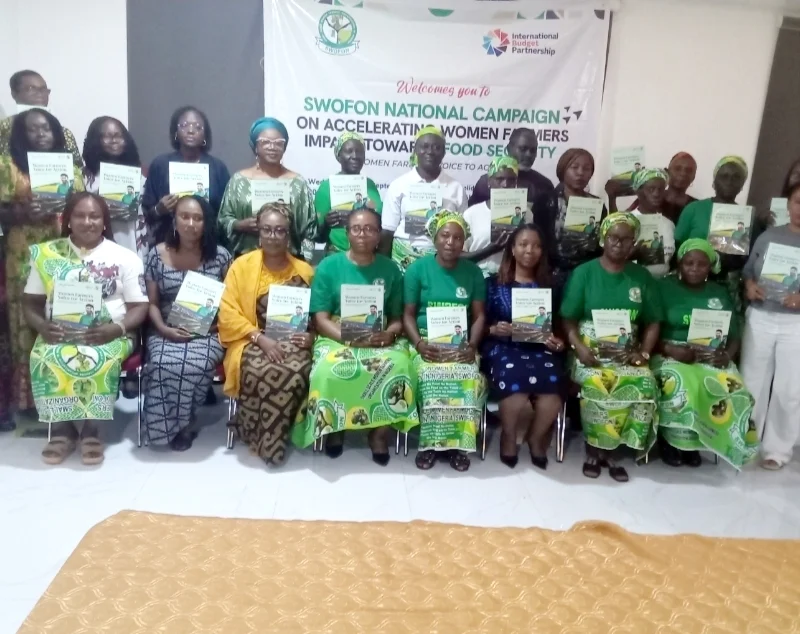
The organisation made the call during its national campaign on accelerating the impact of women farmers on food security, held in Abuja under the theme, “Women Farmers’ Voice to Action.”
The event also featured the presentation of the SWOFON-International Budget Partnership (IBP) SPARK Programme Policy Brief.
SWOFON Acting National President, Florence Ojo, said greater attention to women farmers was essential to improving household welfare, rural livelihoods and Nigeria’s food systems.
She urged policymakers to involve women farmers more directly in the preparation and implementation of agricultural budgets, as well as in decisions affecting the sector.
Ojo said investment in women farmers would contribute to stronger families, communities and the wider economy.
Women farmers seek budget commitments
SWOFON National Secretary, Chinasa Asonye, said increased participation by women farmers in policymaking and budget processes must translate into clear financial commitments and actual delivery of agricultural services.
According to her, the organisation’s campaign is aimed at ensuring that the concerns of women farmers are reflected in government policies, agricultural plans and public budgets.
She said smallholder women farmers remain important contributors to food production and rural economies but continue to face challenges involving access to land, finance, farm inputs, mechanisation, extension services and markets.
Insecurity and limited participation in decision-making processes were also identified as major challenges affecting their activities.
Asonye said evidence from SWOFON’s assessment of its 2019–2025 partnership with the International Budget Partnership under the SPARK project showed that women farmers had made progress in participating in state budget processes.
The assessment covered Nasarawa, Niger, Anambra, Oyo and Jigawa states.
She explained that SWOFON chapters in the five states submitted Charters of Demands to relevant government institutions and received acknowledgement.
However, she said participation had progressed faster than actual fiscal responsiveness, with insufficient evidence that the demands were consistently converted into specific budget allocations, timely releases and measurable projects.
Group calls for inclusive agricultural planning
Asonye urged federal and state governments, local government councils, legislative institutions, development partners and civil society organisations to work more closely with women farmers.
She said formal platforms that allow farmers to participate in setting agricultural priorities would help connect community needs with government budgets and service delivery.
She stressed that smallholder women farmers should not be regarded merely as beneficiaries of agricultural programmes, describing them as producers and economic actors with an important role in Nigeria’s food security.
The campaign brought together women farmers, government representatives, civil society groups, development partners, media professionals and other stakeholders.
Discussions focused on the challenges facing women farmers and ways to strengthen their participation in agricultural policy, budgeting and implementation.