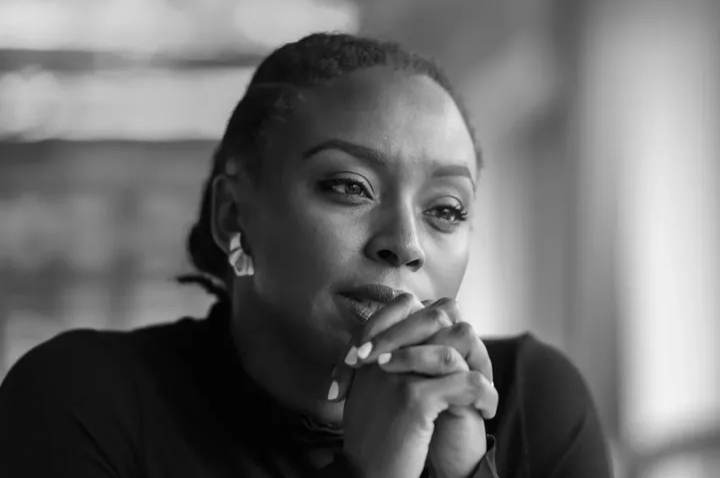
Award-winning Nigerian author, Chimamanda Ngozi Adichie, has revealed that the death of her 21-month-old son, Nkanu, has profoundly changed how she feels about Nigeria.
Adichie made the disclosure in a recent interview with The New York Times, explaining that the country she once regarded as home is now closely associated with the devastating loss of her child.
“My feelings toward Nigeria have changed,” the author said, adding that she currently does not want to return to the country.
Nkanu, one of Adichie’s twin sons with her husband, Dr Ivara Esege, died after suffering a medical emergency at a hospital in Lagos in December 2025.
According to accounts from the family, the child had initially developed symptoms resembling a cold and later developed a fever. He was taken for medical evaluation after his condition failed to improve.
As part of preparations to have him medically transported to the United States, Nkanu underwent an MRI at Euracare Hospital in Lagos. He was sedated with propofol during the procedure and subsequently suffered cardiac arrest.
The circumstances surrounding his death have since become the subject of an ongoing coroner’s inquest.
Adichie and her husband have also sought answers through the Medical and Dental Council of Nigeria. An initial finding reportedly identified negligence involving three physicians, although one of the doctors was subsequently cleared.
The couple has said their primary objective is accountability and improvements in Nigeria’s healthcare system rather than pursuing a lawsuit against the hospital or doctors.
For Adichie, however, the tragedy has also altered her personal relationship with Nigeria.
The country had long been central to her identity and literary work. She previously described Nigeria as a place that gave her the foundation she needed to become a writer, despite also maintaining a home in the United States.
Before the tragedy, Adichie and her family regularly travelled to Nigeria during Christmas, Easter and the summer holidays.
Her surviving children remain attached to the country. She said her daughter still regards Nigeria as her “happy place”, and that her children are among the reasons the family intends to return eventually.
But the emotional connection has become much more complicated following Nkanu’s death.
Adichie said the loss remains difficult to process, describing grief as something she feels physically and emotionally while also having to remain strong for her surviving children.
She has previously written extensively about grief, including following the death of her father in 2020. Her experience following Nkanu’s death, however, has brought another level of pain.
Despite her deep connection to Nigeria and its influence on her writing, Adichie said the tragedy has made returning to the country extremely difficult.
She ultimately stated that she does not want to go back to Nigeria, reflecting the profound impact her son’s death has had on her sense of home and belonging.