
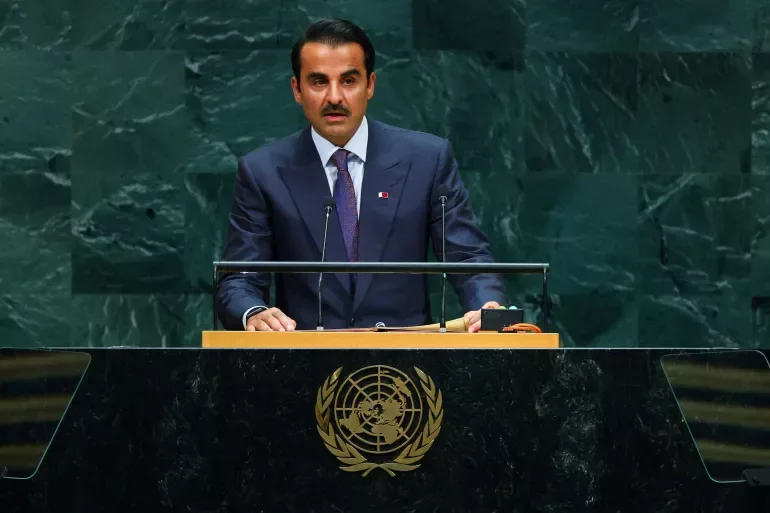
Qatar’s Emir, Sheikh Tamim bin Hamad Al Thani, has warned that the escalating crisis in the Gulf could have serious consequences for the global economy if the conflict continues without a diplomatic resolution.
Speaking on Tuesday at the opening of the 81st United Nations General Assembly in New York, the Emir described the situation in the Gulf as one of the region’s most dangerous periods and called for urgent efforts to prevent further escalation.
Sheikh Tamim said the current crisis was the result of years of unresolved disputes, temporary approaches to conflict management and policies that had failed to establish lasting regional stability.
He argued that the absence of a regional collective security framework had made it possible for conflicts to spread beyond the countries directly involved.
According to the Qatari leader, the disruption of the Strait of Hormuz was particularly concerning because the waterway carries a significant share of global energy supplies.
He warned that turning critical economic and transportation routes into instruments of political pressure could affect people far beyond the Middle East.
The Emir said the consequences were already being felt through higher prices for food and medicine, placing additional pressure on households and economies that had no direct connection to the conflict. Qatar’s official account similarly states that nearly a quarter of the world’s energy trade passes through the waterway.
Qatar Calls for Diplomatic Solution
Despite the seriousness of the situation, Sheikh Tamim said Qatar believed the Gulf crisis could still be resolved through diplomacy.
He called for the reopening of the Strait of Hormuz to maritime traffic and a return to negotiations aimed at preventing further military escalation.
The Emir said a lasting settlement should provide security and stability for all countries in the region, including Iran, while respecting national sovereignty and territorial integrity.
He also reaffirmed Qatar’s role as a mediator in regional disputes, saying dialogue and negotiations remained central to the country’s foreign policy.
Sheikh Tamim urged the international community not to allow the opportunity for a peaceful settlement to pass, describing diplomacy as a realistic route toward de-escalation.
Economic Concerns Mount
The warning comes amid continuing disruption around the Strait of Hormuz, a major route for global energy shipments. Recent reporting has linked the conflict to reduced shipping activity through the waterway and heightened concerns over energy supplies and economic growth.
The broader economic effects could extend beyond oil and gas, with disruptions to shipping and fertiliser supplies creating additional pressure on food production and prices.
Sheikh Tamim therefore called for renewed international efforts to restore stability, reopen vital trade routes and address the underlying disputes through negotiations.
He stressed that peaceful coexistence and dialogue were essential to preventing the Gulf crisis from developing into a wider regional and global economic problem.
The Qatari Emir’s appeal came as diplomatic efforts intensified on the sidelines of the UN General Assembly, with Qatar and other regional countries seeking a pathway toward negotiations between Washington and Tehran.


