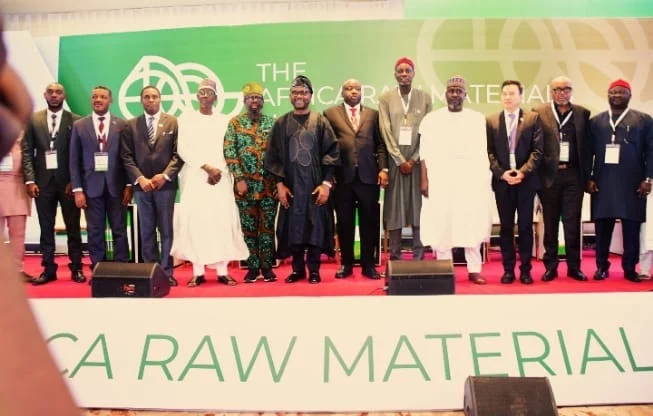
The Federal Government has reiterated its determination to accelerate Nigeria’s industrial development by processing locally available raw materials into finished products, creating jobs and strengthening the country’s manufacturing sector.
The Minister of Innovation, Science and Technology, Dr Kingsley Tochukwu Udeh, stated this on Monday in Abuja during the second Africa Raw Materials Summit (ARMS 2026), which held from October 19 to 20 under the theme, “From African Feedstock to African Factory.”
Udeh said Nigeria and other African countries must move beyond exporting unprocessed natural resources and focus on manufacturing products that generate greater economic value within the continent.
He described the summit as an important part of the Federal Government’s broader industrialisation agenda, which seeks to connect scientific research, technological innovation and industrial production.
According to the minister, closer cooperation between research institutions and manufacturers would help turn scientific discoveries into commercially viable products, create employment opportunities and promote economic prosperity.
He stressed that Nigeria’s abundant mineral and agricultural resources could serve as the foundation for a stronger, knowledge-driven economy if effectively processed and utilised.
FG Targets Greater Local Value Addition
Udeh explained that the government was working towards establishing an industrial system that encourages the domestic processing of raw materials rather than exporting them in their basic form and importing more expensive finished goods.
He said the approach would help retain more economic value within Nigeria, strengthen local businesses and reduce dependence on imported products and foreign technologies.
The minister also described the summit as a platform for reviewing progress made since the inaugural edition, identifying challenges affecting implementation and developing practical strategies to advance industrial growth.
He maintained that turning local resources into manufactured products was essential to achieving economic independence and building competitive industries across Africa.
RMRDC Advocates Stronger Domestic Processing
The Director-General of the Raw Materials Research and Development Council (RMRDC), Prof. Nnanyelugo Ike-Muonso, highlighted the importance of policies that encourage manufacturers to source and process more raw materials locally.
He identified a proposed minimum 30 per cent domestic value-addition framework and the ongoing review of the RMRDC Act as measures that could encourage investment in local processing and manufacturing.
Ike-Muonso also stressed the need to commercialise research findings and reduce dependence on imported technology, noting that these efforts were important to strengthening Nigeria’s industrial capacity.
He explained that the country needed a coordinated strategy that identifies available resources, develops appropriate processing methods and supports industries capable of turning those resources into marketable products.
According to him, effective collaboration between government agencies, research institutions, investors and manufacturers would help bridge the gap between raw material production and industrial manufacturing.
National Assembly, Manufacturers Back Industrialisation Drive
The Chairman of the Senate Committee on Science and Technology, Senator Aminu Abbas, reaffirmed the National Assembly’s commitment to supporting legislation and policies that promote research, innovation and domestic manufacturing.
Similarly, the Director-General of the Manufacturers Association of Nigeria (MAN), Francis Meshioye, called for stronger local production of raw materials to support the country’s manufacturing industries.
Meshioye warned that expanding the production of finished goods without a corresponding improvement in the availability of locally produced intermediate materials could limit the benefits of industrialisation.
He disclosed that the proportion of raw materials sourced locally by manufacturers had increased from 51.5 per cent in 2021 to 57.1 per cent in more recent figures.
Although he described the increase as encouraging, he said Nigeria still needed to address gaps in domestic raw material production and processing.
Summit Seeks to Strengthen Africa’s Industrial Future
The two-day summit brought together stakeholders from government, research institutions and the private sector to discuss ways of improving the use of Africa’s natural resources for industrial development.
Discussions centred on increasing local manufacturing, encouraging investment, promoting technological innovation and strengthening partnerships across the raw materials value chain.
The Federal Government maintains that greater investment in research, modern processing technologies and domestic manufacturing will be critical to converting Nigeria’s natural resource wealth into sustainable economic growth.
The initiative is also expected to support job creation, expand opportunities for local businesses and strengthen the country’s ability to produce goods for domestic consumption and international markets.