States across Nigeria are stepping up efforts to reduce transportation costs through the Compressed Natural Gas (CNG) initiative, as the Federal Government targets noticeable fare reductions from October 1.
The rollout, however, remains uneven, with some states already running subsidised transport services while commercial transport operators in other areas continue to face challenges including limited refuelling facilities, expensive vehicle conversions and lengthy queues at available CNG stations.
The situation has raised concerns about whether states and transport operators will be able to achieve the intended reduction in fares within the timeframe set by the Federal Government.
President Bola Tinubu had, after a meeting with the 36 state governors on August 27, announced the establishment of an implementation committee for the National Affordable CNG Transit Programme under the Nigeria Governors’ Forum. The committee is chaired by Governor AbdulRahman AbdulRazaq.
In a subsequent update, Tinubu called on state governments to collaborate with transport unions and commercial operators, assist with vehicle conversions and fleet deployment, and ensure that savings from cheaper energy are reflected in lower fares for commuters.
According to the Presidency, more than 120,000 vehicles have so far been converted to CNG, while over 400 certified conversion centres and more than 90 refuelling stations are operating nationwide.
Despite the expansion, operators in some parts of the country say the available infrastructure is still insufficient to meet growing demand.
Long Queues At CNG Stations
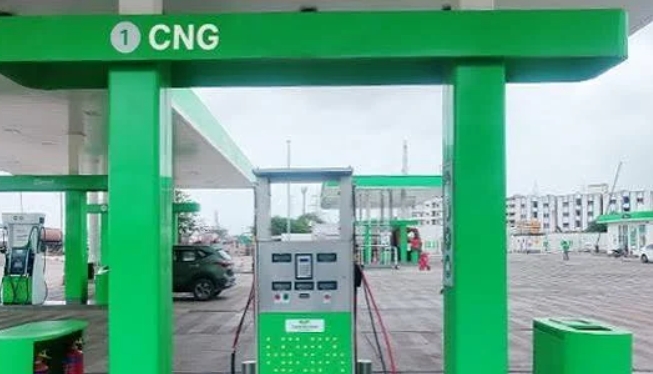
In Lagos, motorists have continued to experience long queues at some CNG stations, including the NIPCO facility at Ibafo along the Lagos-Ibadan Expressway.
During a recent visit at about 9:30 p.m., buses, cars and trucks were reportedly seen waiting to purchase CNG, with the queue stretching towards the expressway.
A commercial driver identified as Saheed said the limited number of stations was responsible for the delays, adding that some operators were returning to petrol because of the difficulties associated with accessing CNG.
Some commuters have also expressed dissatisfaction with the long waiting periods, saying delays at refuelling stations can affect journey times.
Similar queues have reportedly been observed around Mowe and Ibafo, as well as at NNPC Ilasamaja and NIPCO Mobil on Ajegunle Road.
For some commercial vehicle owners, the cost of converting vehicles to CNG is another major obstacle. One driver, Musa Kazeem, said he had considered conversion but was discouraged after being informed that the process could cost between N800,000 and N1 million, depending on the cylinder capacity.
He also raised concerns about spending additional hours at CNG stations after conversion.
Transport Operators Seek More Infrastructure
The National President of the National Association of Road Transport Owners (NARTO), Yusuf Othman, said the queues were causing financial losses for transport operators because of the time spent waiting to refuel.
Othman attributed the situation largely to the shortage of CNG refuelling stations but said additional facilities were being developed.
He pointed to government intervention through the Midstream and Downstream Gas Infrastructure Fund as part of efforts to expand the country’s CNG infrastructure.
According to him, increased availability of stations should gradually ease the queues as more transport operators adopt CNG.
Othman also maintained that CNG remains less expensive than petrol and described the transition as part of a broader shift toward cleaner and more affordable energy for transportation.
As states continue implementing measures aimed at lowering transport fares, the effectiveness of the CNG programme will depend in part on the availability of conversion centres, affordable conversion costs and sufficient refuelling infrastructure to meet demand.