


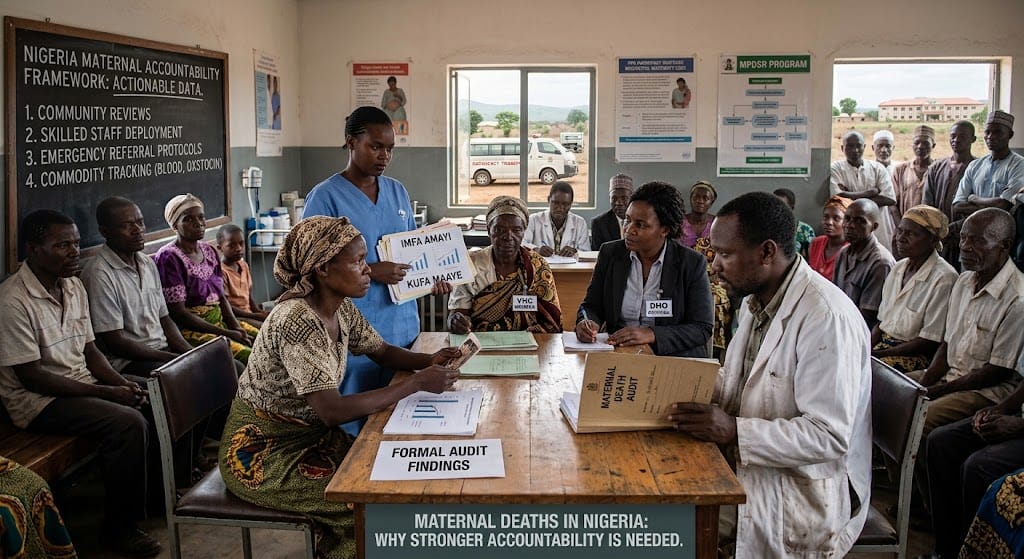
Maternal deaths in Nigeria continue to raise serious questions about the country’s healthcare system, particularly the mechanisms in place to investigate preventable deaths and ensure that lessons are learned.
A maternal death should not simply end with the issuance of a death certificate. It should trigger a careful examination of what happened, the factors that contributed to the death and what can be done to prevent a similar tragedy.
The need for such investigations is especially important given Nigeria’s high maternal mortality burden. The World Health Organisation estimates that the country has one of the highest maternal mortality ratios globally, with approximately 1,047 maternal deaths per 100,000 live births.
Many of the leading causes of maternal deaths, including postpartum haemorrhage, eclampsia, sepsis and complications from obstructed labour, can often be prevented or managed when women receive timely and appropriate medical attention.
However, preventing these deaths requires healthcare institutions to understand why they occur. Without proper investigations, systemic problems such as inadequate blood supplies, delayed referrals, shortages of medical personnel, transportation challenges and gaps in emergency care may remain unresolved.
Lessons From Ondo State
Ondo State provides an example of how maternal death reviews can be used to identify weaknesses within the healthcare system.
In 2009, the state introduced a Confidential Enquiry into Maternal Deaths, through which a multidisciplinary team reviewed maternal deaths and examined the circumstances surrounding each case.
The process looked beyond the immediate medical cause of death. It considered issues such as antenatal care, referral delays, availability of blood and transportation challenges.
Between 2012 and 2015, the state recorded a reduction in its reported maternal mortality ratio from 253 to 170 deaths per 100,000 live births. Measures introduced during the period included healthcare worker training, tricycle ambulances and subsidised transportation for women in labour.
Although the study did not establish that the enquiry alone was responsible for the reduction, it demonstrated the value of having a structured system that converts information from maternal deaths into measures aimed at improving healthcare delivery.
Nigeria’s Legal Gap
Nigeria already has a Maternal and Perinatal Death Surveillance and Response (MPDSR) framework designed to monitor maternal and perinatal deaths and encourage health institutions to respond to identified problems.
However, the article argues that the system lacks sufficient legal force to ensure consistent implementation across the country.
According to the report, a proposed MPDSR Bill developed by the Federal Ministry of Health has not been confirmed as having received presidential assent as of August 2026. Only Ebonyi and Kogi states are identified as having dedicated legislation supporting the system.
This means that many states do not have a statutory requirement compelling hospitals to investigate maternal deaths and demonstrate the measures taken to prevent similar incidents.
Investigating Deaths Should Not Mean Blaming Health Workers
A formal review of maternal deaths should not automatically be interpreted as an attempt to punish doctors, nurses or other healthcare workers.
Medical personnel often operate in difficult environments characterised by inadequate resources, staffing shortages and weak infrastructure. In some cases, the healthcare worker may also be affected by the same systemic failures that contributed to a patient’s death.
A properly designed investigation should therefore focus on identifying the underlying causes rather than creating a culture of blame.
For example, if a woman dies from severe bleeding in a facility without adequate blood supplies, investigators should examine why the blood bank lacked supplies and whether the problem resulted from funding, procurement, management or other systemic failures.
Such an approach can protect healthcare workers while also helping hospitals and government agencies correct weaknesses.
Strengthening Accountability
Several measures have been proposed to improve Nigeria’s response to maternal deaths.
One is the establishment of a stronger national legal framework for mandatory maternal death surveillance. Such legislation would give the existing MPDSR system greater authority and ensure that investigations are conducted consistently.
There is also a call for states to establish independent maternal death review bodies with sufficient powers to examine records and recommend systemic reforms.
In addition, existing provisions of the National Health Act relating to emergency medical treatment need stronger enforcement. The Act prohibits health establishments from refusing emergency treatment and provides penalties for violations.
A Matter of Life and Dignity
For families who lose mothers during childbirth, knowing the cause of death and understanding what went wrong can be an important part of obtaining justice and closure.
More importantly, investigating each death can help prevent another family from experiencing the same loss.
Nigeria’s response to maternal mortality therefore needs to go beyond recording statistics. Every maternal death should provide an opportunity to identify weaknesses, improve healthcare services and strengthen accountability.
A woman who enters a hospital to give birth should receive safe and timely care. When a death occurs, her family deserves more than a certificate recording the loss. They deserve an explanation, while the health system owes future mothers the lessons that can be drawn from that tragedy.
Source: The article was based on the analysis published by NewsCoven on August 23, 2026.