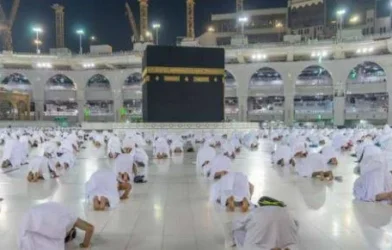

Saudi Arabia is introducing major changes to the administration of the annual Hajj pilgrimage as part of efforts under its Vision 2030 programme to modernise operations, strengthen regulation and improve services for pilgrims.
The Chairman of the National Hajj Commission of Nigeria (NAHCON), Malam Ismail Yusuf, disclosed this in Abuja during a media briefing on the new Saudi Hajj policies and their implications for Nigerian pilgrims.
Yusuf said the reforms represented a significant restructuring of the way Hajj services are organised, with Saudi authorities moving from a largely state-managed arrangement towards a more commercialised, digitally driven and regulated system.
According to him, the changes are connected to Saudi Arabia’s broader plan to expand its capacity to accommodate up to 30 million pilgrims by 2030 while maintaining safety and operational standards.
One of the major components of the new policy is the adoption of a Business-to-Business (B2B) model. Under the arrangement, Saudi authorities are reducing direct dealings with government-managed pilgrimage agencies and increasing the role of licensed private tour operators.
Yusuf said an initial proposal affecting Nigeria sought to move about 98 per cent of Nigerian pilgrims to the tour-operator model.
He explained that the Saudi authorities had also reviewed the categories of Hajj service packages covering accommodation, transportation and feeding.
Previously, pilgrims could choose from several service grades, including premium options and lower-cost packages. However, Yusuf said Saudi Arabia had decided to discontinue the Grade-D category, which had provided a cheaper option for pilgrims.
The NAHCON chairman noted that the change could have particular implications for Nigerian pilgrims because many people save for several years before being able to undertake the pilgrimage.
Another major aspect of the reforms is the professionalisation of Hajj administration. Yusuf said officials responsible for managing pilgrims would be required to undergo specialised training and obtain certification.
The training will cover areas such as logistics, medical services, emergency and disaster management, crowd control and pilgrim welfare.
Under the new requirements, individuals without the necessary certification will not be permitted to serve as official Hajj managers, although they can still participate in the pilgrimage as ordinary pilgrims.
Digitalisation is also central to the reforms. Yusuf said platforms including Nusuk and Masaar would play important roles in the management of Hajj-related processes.
He explained that procedures such as visa applications, hotel reservations, flight confirmations, entry permits and access to holy sites are increasingly being handled through digital platforms.
The development means countries sending pilgrims, including Nigeria, will need adequate digital infrastructure and technical expertise to meet the new requirements and prevent delays.
Saudi Arabia has also introduced strict deadlines for countries preparing their pilgrims for the annual pilgrimage. Yusuf said the deadline for uploading information for the 2027 Hajj had been set for September 26, 2026, with no extension expected.
He therefore urged Nigerian state pilgrims’ welfare boards, tour operators and other stakeholders to complete registration, documentation, payments and other required processes within the stipulated period.
The reforms form part of Saudi Arabia’s wider efforts to improve the Hajj experience through technology, service-quality initiatives and more coordinated pilgrimage management. Saudi authorities have said Vision 2030 is being used to improve efficiency, safety and accessibility throughout the Hajj and Umrah journey.
For Nigeria, the changes are expected to require closer coordination between NAHCON, state pilgrimage authorities, private operators and intending pilgrims as the country adjusts to the new Saudi framework.
NAHCON has said it will continue to engage stakeholders and strengthen its systems to ensure Nigerian pilgrims can comply with the new requirements while safeguarding their welfare during the pilgrimage.