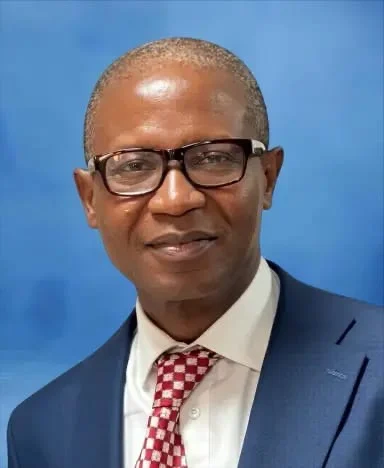
An investment expert, Chukwudi Nga, has called for further expansion and deepening of Nigeria’s capital market, saying this is essential if the country is to achieve its ambition of becoming a $1 trillion economy by 2030.
Nga, Managing Director of Morgan Capital Investment Ltd., made the call in Lagos during an interview with the News Agency of Nigeria (NAN).
He said Nigeria had already established key institutions, regulations, infrastructure and investment products needed to support a modern capital market. However, he noted that the market had yet to reach the depth required to adequately meet the financing demands of the economy.
According to him, the next stage should focus on increasing quality listings, improving market liquidity, expanding the number of domestic investors and directing more long-term savings into productive areas of the economy.
Nga also pointed to recent developments in the Nigerian capital market, including the adoption of the T+1 settlement cycle, which commenced on June 1. The Securities and Exchange Commission (SEC) said the move was designed to improve efficiency, reduce counterparty risks, boost liquidity and bring the market closer to international standards.
He further identified Nigeria’s return to FTSE Russell Frontier Market status in September as another positive development capable of improving the country’s attractiveness to international investors.
While acknowledging the progress, Nga said reforms must ultimately translate into increased access to long-term funding for businesses and infrastructure projects.
He urged more companies to utilise equity offerings, corporate bonds and commercial papers to raise capital. For infrastructure development, he recommended greater use of instruments such as infrastructure bonds, Sukuk, project bonds and asset-backed securities.
The investment expert said the capital market should evolve beyond its traditional role of facilitating the trading of existing securities and become a major source of long-term financing for businesses, infrastructure and other productive activities.
He identified pension funds, insurance companies, mutual funds and other institutional investors as important sources of the long-term capital required to support economic expansion.
Nga said government could encourage greater participation by introducing suitable tax incentives, reducing transaction costs, speeding up approval processes and creating policies that would encourage institutional investors to increase their long-term investments.
He also cited the ongoing Initial Public Offering (IPO) of Dangote Petroleum Refinery and Petrochemicals as an example of a large-scale transaction capable of expanding the market. The offering involves 4.1 billion shares priced at N525 each, giving it an estimated value of about N2.15 trillion.
According to him, transactions of this magnitude, alongside future listings by major public and private companies, could increase investment opportunities and allow more Nigerians to own stakes in major businesses.
Nga, however, cautioned against relying solely on market capitalisation when assessing the strength of Nigeria’s capital market.
He said a genuinely deep market should have a strong pipeline of quality companies across different sectors, adequate liquidity, broad participation from retail and institutional investors, a robust corporate debt market and the ability to direct long-term funds into productive ventures.
He listed energy, telecommunications, technology, manufacturing, agriculture and infrastructure among sectors that require stronger participation in the capital market.
Commenting on monetary policy, Nga said the reduction of the Monetary Policy Rate (MPR) to 23 per cent could eventually affect how investors distribute their funds between equities and fixed-income instruments.
He explained that lower interest rates could support the equities market by reducing borrowing costs for businesses while making fixed-income investments comparatively less attractive.
However, he advised investors not to make investment decisions simply because interest rates were declining. Instead, he urged them to consider factors such as corporate earnings, cash flow, governance, business fundamentals and valuation.
Nga also advocated greater financial education to encourage more Nigerians to participate in the capital market.
He said investment should be made easier, safer, more affordable and more understandable, noting that many Nigerians still associate the stock market mainly with wealthy individuals or short-term speculation.
He stressed the importance of encouraging regular and disciplined investment as part of long-term savings and wealth creation.
According to Nga, Nigeria has developed much of the institutional foundation required for a modern capital market, but the major challenge now is to achieve greater scale and participation.
He therefore called for continued efforts to attract more quality companies and projects, mobilise domestic savings and channel long-term funds into manufacturing, infrastructure and other productive sectors.
He maintained that the capital market must play a central role in Nigeria’s drive to achieve a $1 trillion economy by 2030.