The World Bank Group has praised Nigeria’s economic reform efforts following a significant increase in private capital inflows, which have climbed from approximately $300 million in 2023 to nearly $6 billion in 2026.
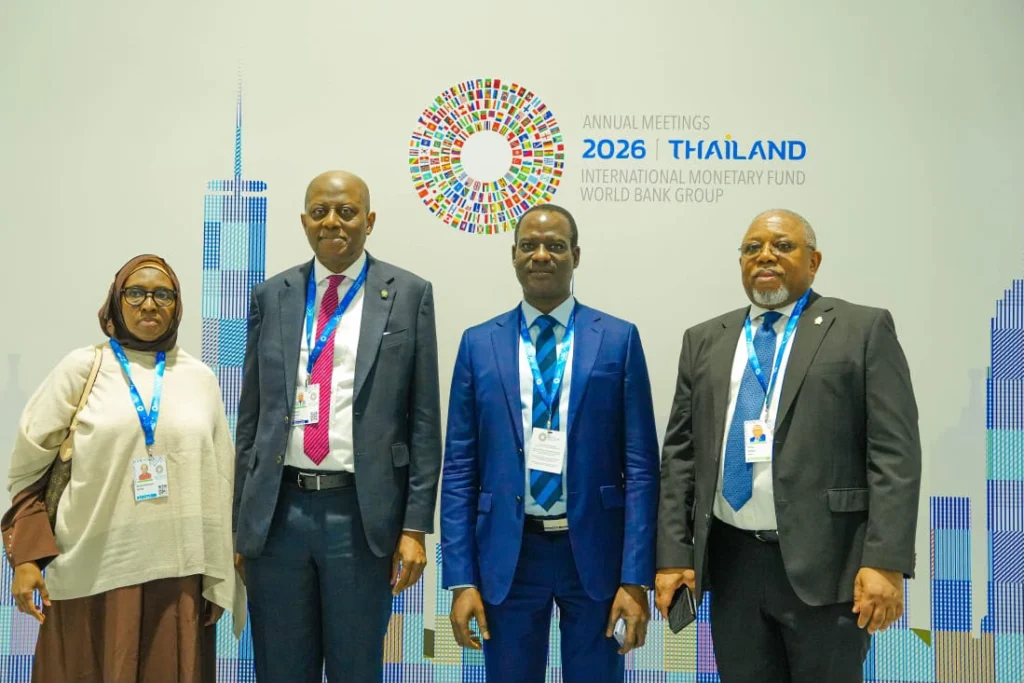
World Bank Group President, Ajay Banga, made the commendation during a meeting with Nigeria’s Minister of Finance and Coordinating Minister of the Economy, Taiwo Oyedele, and the Governor of the Central Bank of Nigeria (CBN), Olayemi Cardoso, in Bangkok, Thailand.
The meeting took place on the sidelines of the 2026 International Monetary Fund (IMF) and World Bank Group Annual Meetings. Discussions focused on Nigeria’s reform progress and strategies for converting improved economic stability into stronger growth and increased investment. <Cite refs={[“turn329086search0″,”turn329086search1”]}/>
Nigeria Explores New Ways to Attract Investment
The meeting also examined how Nigeria could make greater use of World Bank guarantee instruments to secure funding for infrastructure projects and encourage additional private-sector investment.
Such financial instruments could help reduce investment risks and make it easier to attract funding for major projects, particularly in sectors requiring substantial long-term capital.
Banga commended the progress recorded under Nigeria’s ongoing economic reforms, while discussions highlighted the importance of increasing private investment and strengthening the country’s domestic revenue base.
Tax Revenue Improves, Says Oyedele
During the engagement, Oyedele disclosed that Nigeria’s tax-to-gross domestic product (GDP) ratio had risen from approximately seven per cent to 12.5 per cent.
He said the improvement could give the government greater financial capacity to fund public investments without relying on deficit monetisation.
The minister identified electricity infrastructure and human capital development as critical areas requiring continued public investment. According to him, progress in these sectors would help improve business competitiveness, raise productivity and support job creation.
FG Targets Growth and Better Living Standards
Oyedele explained that the Federal Government was working to build on the gains of its economic reforms by attracting new investments through partnerships with international development institutions.
He said Nigeria’s priority was to ensure that improvements in key economic indicators translated into productive investments, more employment opportunities and better living conditions for citizens.
Participants at the meeting also stressed the importance of making public expenditure more efficient, with government spending expected to produce measurable economic and social benefits.
The discussions reflect Nigeria’s efforts to strengthen investor confidence, expand infrastructure financing and create conditions for sustainable economic growth.