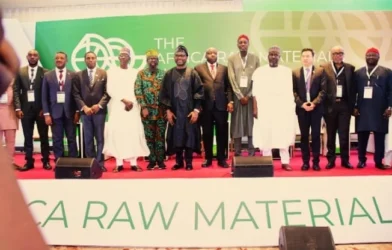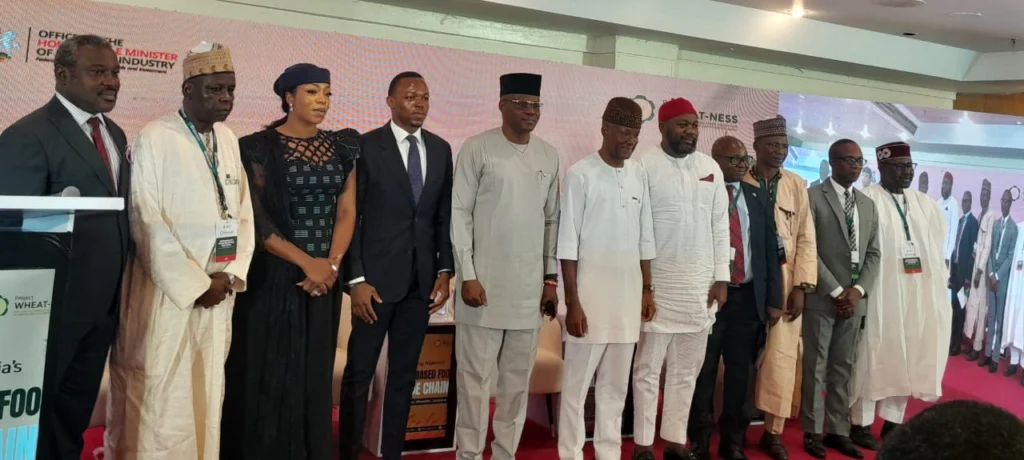
The Federal Government has clarified that Project WHEAT-NESS is not a subsidy scheme but a comprehensive initiative designed to improve Nigeria’s wheat industry, from local production to the final consumer.
The Minister of State for Industry, Senator John Enoh, made the clarification on Wednesday in Abuja during the inauguration of the Wheat-Based Consumer Foods Value Chain Optimisation and Cost Competitiveness Programme.
Enoh, who chairs the programme’s Steering Committee, explained that the initiative would address challenges across the entire wheat value chain rather than focus on agricultural production alone.
He identified five key areas of intervention: raw material supply, industrial processing, downstream businesses, consumer markets, and the financial and policy structures needed to support the industry.
According to the minister, improving industrial competitiveness and making wheat-based products more affordable should be treated as connected objectives.
He urged government agencies and private-sector operators to coordinate their efforts, noting that problems in one part of the value chain could create additional costs elsewhere.
Enoh also commended Nigerian millers and bakers for continuing to operate despite rising production costs and the difficulties associated with maintaining affordable prices for consumers.
He noted that Nigeria had between two million and 3.5 million hectares of land with irrigation potential for wheat cultivation. He added that improved seed varieties, appropriate planting schedules, better crop nutrition and effective water management could significantly increase yields.
The minister said the programme’s performance would be assessed through measurable improvements, including stronger businesses, better utilisation of milling facilities, job creation and reduced costs for consumers.
Nigeria Imports More Than Six Million Tonnes of Wheat Annually
The Permanent Secretary of the Federal Ministry of Industry, Trade and Investment, Dr Chris Isokpunwu, disclosed that Nigeria imports more than six million tonnes of wheat each year, spending over $2 billion on the commodity.
He said Project WHEAT-NESS aims to reduce the country’s dependence on imported wheat by between 10 and 15 per cent within three years.
According to him, achieving the target could generate annual foreign exchange savings of between $200 million and $300 million.
Isokpunwu added that the programme was expected to stimulate employment, strengthen food-processing businesses and support bakers while helping to bring down the retail prices of bread.
He also disclosed plans for a proposed development fund dedicated to Nigeria’s wheat-based consumer food industry. The fund is expected to provide a structure for reinvesting in the sector and supporting its long-term growth.
The permanent secretary stressed that the programme should be judged by its practical outcomes rather than the inauguration ceremony.
He called on businesses to improve efficiency and increase their investment, while urging financial institutions to provide funding for viable enterprises across the value chain.
Local Wheat Production Remains Below Demand
The National Programme Coordinator, Mr Gerald Okunsebor, said Nigeria currently produces approximately 120,000 tonnes of wheat locally while importing about six million tonnes annually.
He projected that national wheat consumption could rise to 10 million tonnes by 2034. He also noted that Nigeria’s milling capacity was operating at about 50 per cent utilisation.
Okunsebor explained that previous interventions had often concentrated on increasing farm output without adequately addressing processing, storage, distribution and market requirements.
He argued that expanding production alone would not solve the industry’s challenges if the wheat varieties produced did not meet the needs of millers and bakers.
According to him, Project WHEAT-NESS will run for 24 months through two main components: programme activities and a development fund designed to combine public and private financing.
A baseline assessment will examine the sector’s major operations, including agricultural inputs, storage, processing, distribution and sales, to identify constraints and determine where interventions are most urgently needed.
He said initial interventions were expected before the end of the year.
Okunsebor further disclosed that President Bola Tinubu had directed that monthly reports be submitted on the programme’s progress.
He added that industry stakeholders would contribute to shaping implementation priorities through discussions and working sessions.
The initiative is expected to improve coordination among farmers, manufacturers, millers, bakers, investors and government institutions, with the broader goal of strengthening local production, reducing import dependence and improving the affordability of wheat-based foods in Nigeria.