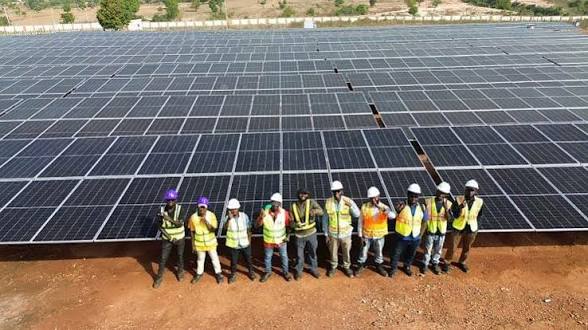
The Federal Government has put plans for an immediate ban on imported solar panels on hold, following concerns that such a move could increase equipment prices, disrupt renewable energy projects and slow Nigeria’s transition to cleaner energy sources.
Minister of Innovation, Science and Technology, Kingsley Udeh, said the government would prioritise quality control in the solar market while working to strengthen local manufacturing capacity.
His position reflects the need to balance Nigeria’s ambition to produce solar equipment domestically with the growing demand for affordable and reliable electricity among households, businesses and public institutions.
Nigeria continues to depend significantly on imported solar panels as consumers seek alternatives to unreliable grid electricity and the rising cost of running petrol and diesel generators.
According to data from Chinese customs cited by energy think tank Ember, China exported approximately 2.4 gigawatts of solar panels to Nigeria in the 12 months leading up to August 2026. The shipments were valued at $269 million, highlighting the importance of imports to the country’s expanding solar energy market.
FG to Enforce Solar Product Quality Standards
Speaking in an interview with the Nigerian Television Authority (NTA), Udeh explained that Nigeria could not reasonably prohibit solar panel imports before establishing enough domestic production capacity to meet national demand.
He said the government intended to ensure that solar panels available in the Nigerian market met acceptable standards, regardless of whether they were manufactured locally or sourced from trusted international suppliers.
The minister also referenced the Renewed Hope Solarisation Project, an initiative designed to improve electricity access in federal universities and other specialised institutions.
The government’s approach is expected to provide room for domestic manufacturing to develop without immediately cutting off supplies from international producers.
Renewable Energy Stakeholders Warn Against Import Restrictions
Industry stakeholders have welcomed the decision, arguing that Nigeria’s existing solar manufacturing capacity is not yet sufficient to satisfy national demand in terms of both production volume and affordability.
Ayo Ademilua, President of the Renewable Energy Association of Nigeria, said the association supported the development of a domestic solar manufacturing industry but cautioned against imposing restrictions before local producers could adequately supply the market.
He noted that solar power had become an important electricity source for homes, hospitals, schools, farms and small businesses, particularly in areas with limited access to the national grid.
According to Ademilua, an immediate import ban could increase equipment costs, delay ongoing projects and reverse some of the progress made in expanding solar adoption over the past decade.
Similarly, David Michael, Executive Director of the Global Initiative for Food Security and Ecosystem Preservation, said Nigeria could develop its domestic manufacturing industry without making renewable energy less affordable for consumers.
He called for a long-term policy framework that would encourage investment in local production while ensuring that households and businesses continued to have access to dependable and affordable electricity.
Muhammad Mustafa Amjad, Programme Director of Renewables First in Pakistan, also highlighted the benefits of affordable solar technology, pointing to Pakistan’s experience in helping households and businesses reduce their dependence on conventional electricity sources.
Joseph Ibrahim, Nigeria Campaign Director of the Secure Energy Project, also welcomed the government’s position. He stressed that access to affordable solar equipment remained essential for millions of Nigerians dealing with unreliable electricity supply.
Ibrahim urged the government to establish clear targets, investment incentives and a practical timeline for expanding domestic manufacturing.
Solar Energy Offers Potential Cost Savings
The financial benefits of solar power have become a significant consideration for Nigerian consumers seeking alternatives to diesel-powered generators.
Energy estimates cited in the report suggest that generating electricity equivalent to the output of the solar panels imported from China during the period under review could cost approximately $980 million annually if diesel generators were used.
By comparison, the imported panels were valued at $269 million, suggesting considerable potential savings where solar generation replaces diesel-powered electricity. However, actual savings depend on installation expenses, battery storage, maintenance, equipment lifespan and the amount of diesel consumption displaced.
Solar systems are increasingly attractive to businesses because they can reduce exposure to fuel price changes and interruptions in public electricity supply.
Debate Over Import Ban Dates Back to 2025
Discussions about restricting solar panel imports began in March 2025, when former Minister of Innovation, Science and Technology Uche Nnaji proposed limiting imports to encourage domestic manufacturing.
Although officials subsequently indicated that restrictions would not be introduced until local manufacturers could meet national demand, the absence of a definitive policy resolution created uncertainty among businesses and renewable energy advocates.
Stakeholders are now calling for a gradual transition over three to five years, supported by manufacturing incentives, technical training, investment opportunities and clearly defined production targets.
They believe such a framework would give Nigerian manufacturers time to expand their operations while protecting consumers from sudden increases in solar equipment prices.
The government now faces the challenge of growing local production, improving product quality and attracting investment without undermining access to affordable renewable energy.The Federal Government has put plans for an immediate ban on imported solar panels on hold, following concerns that such a move could increase equipment prices, disrupt renewable energy projects and slow Nigeria’s transition to cleaner energy sources.
Minister of Innovation, Science and Technology, Kingsley Udeh, said the government would prioritise quality control in the solar market while working to strengthen local manufacturing capacity.
His position reflects the need to balance Nigeria’s ambition to produce solar equipment domestically with the growing demand for affordable and reliable electricity among households, businesses and public institutions.
Nigeria continues to depend significantly on imported solar panels as consumers seek alternatives to unreliable grid electricity and the rising cost of running petrol and diesel generators.
According to data from Chinese customs cited by energy think tank Ember, China exported approximately 2.4 gigawatts of solar panels to Nigeria in the 12 months leading up to August 2026. The shipments were valued at $269 million, highlighting the importance of imports to the country’s expanding solar energy market.
FG to Enforce Solar Product Quality Standards
Speaking in an interview with the Nigerian Television Authority (NTA), Udeh explained that Nigeria could not reasonably prohibit solar panel imports before establishing enough domestic production capacity to meet national demand.
He said the government intended to ensure that solar panels available in the Nigerian market met acceptable standards, regardless of whether they were manufactured locally or sourced from trusted international suppliers.
The minister also referenced the Renewed Hope Solarisation Project, an initiative designed to improve electricity access in federal universities and other specialised institutions.
The government’s approach is expected to provide room for domestic manufacturing to develop without immediately cutting off supplies from international producers.
Renewable Energy Stakeholders Warn Against Import Restrictions
Industry stakeholders have welcomed the decision, arguing that Nigeria’s existing solar manufacturing capacity is not yet sufficient to satisfy national demand in terms of both production volume and affordability.
Ayo Ademilua, President of the Renewable Energy Association of Nigeria, said the association supported the development of a domestic solar manufacturing industry but cautioned against imposing restrictions before local producers could adequately supply the market.
He noted that solar power had become an important electricity source for homes, hospitals, schools, farms and small businesses, particularly in areas with limited access to the national grid.
According to Ademilua, an immediate import ban could increase equipment costs, delay ongoing projects and reverse some of the progress made in expanding solar adoption over the past decade.
Similarly, David Michael, Executive Director of the Global Initiative for Food Security and Ecosystem Preservation, said Nigeria could develop its domestic manufacturing industry without making renewable energy less affordable for consumers.
He called for a long-term policy framework that would encourage investment in local production while ensuring that households and businesses continued to have access to dependable and affordable electricity.
Muhammad Mustafa Amjad, Programme Director of Renewables First in Pakistan, also highlighted the benefits of affordable solar technology, pointing to Pakistan’s experience in helping households and businesses reduce their dependence on conventional electricity sources.
Joseph Ibrahim, Nigeria Campaign Director of the Secure Energy Project, also welcomed the government’s position. He stressed that access to affordable solar equipment remained essential for millions of Nigerians dealing with unreliable electricity supply.
Ibrahim urged the government to establish clear targets, investment incentives and a practical timeline for expanding domestic manufacturing.
Solar Energy Offers Potential Cost Savings
The financial benefits of solar power have become a significant consideration for Nigerian consumers seeking alternatives to diesel-powered generators.
Energy estimates cited in the report suggest that generating electricity equivalent to the output of the solar panels imported from China during the period under review could cost approximately $980 million annually if diesel generators were used.
By comparison, the imported panels were valued at $269 million, suggesting considerable potential savings where solar generation replaces diesel-powered electricity. However, actual savings depend on installation expenses, battery storage, maintenance, equipment lifespan and the amount of diesel consumption displaced.
Solar systems are increasingly attractive to businesses because they can reduce exposure to fuel price changes and interruptions in public electricity supply.
Debate Over Import Ban Dates Back to 2025
Discussions about restricting solar panel imports began in March 2025, when former Minister of Innovation, Science and Technology Uche Nnaji proposed limiting imports to encourage domestic manufacturing.
Although officials subsequently indicated that restrictions would not be introduced until local manufacturers could meet national demand, the absence of a definitive policy resolution created uncertainty among businesses and renewable energy advocates.
Stakeholders are now calling for a gradual transition over three to five years, supported by manufacturing incentives, technical training, investment opportunities and clearly defined production targets.
They believe such a framework would give Nigerian manufacturers time to expand their operations while protecting consumers from sudden increases in solar equipment prices.
The government now faces the challenge of growing local production, improving product quality and attracting investment without undermining access to affordable renewable energy.