


BudgIT Foundation, a civic technology organization focused on public finance and accountability, says its various transparency initiatives have reached more than 22 million Nigerians.
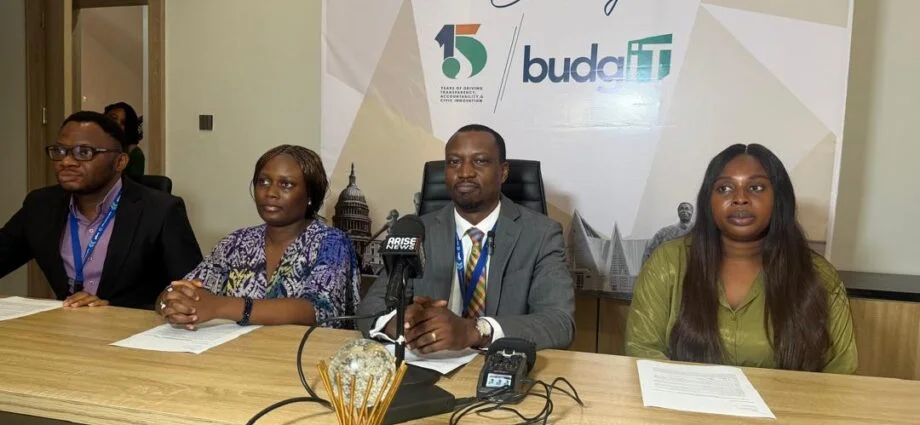
The organization disclosed this in Abuja on Monday during a briefing organized as part of activities marking its 15th anniversary.
Country Director of BudgIT Foundation, Vahyala Kwaga, said the organization had grown from a Nigeria-based initiative into a Pan-African civic-tech organization with operations in Nigeria, Ghana, Sierra Leone, Liberia and Senegal, as well as an office in Washington, D.C.
According to him, BudgIT has developed several digital platforms designed to make government financial information easier for citizens to understand and monitor.
Among the platforms are Tracka, GovSpend, Live Results, Me.BudgIT.org, Open States, Kwerty and the Federal Government Budget Dashboard.
Kwaga explained that the tools had helped citizens follow public spending, understand government budgets and demand greater accountability from public institutions.
He also highlighted BudgIT’s work in strengthening fiscal transparency at the state level through its State of States Fiscal Report, which has been published in 10 editions.
He said that, working with the World Bank, BudgIT contributed to an increase in the number of Nigerian states publishing their budgets, from only three states in 2014 to all 36 states.
The organization also introduced the States Fiscal Transparency League Table, an initiative aimed at encouraging state governments to improve the disclosure of financial information.
Kwaga said BudgIT’s community monitoring efforts had so far covered 19,644 projects valued at about N8.5 trillion across 7,589 communities.
He added that more than 11,800 projects covering health, education and infrastructure had subsequently been completed, with the projects estimated to have benefited over 11.5 million Nigerians.
According to him, BudgIT has further facilitated more than 7,600 town hall meetings aimed at improving citizens’ participation in governance and strengthening engagement between communities and public institutions.
He said the organization’s GovSpend platform had also supported more than 60 media investigations and reports that identified potentially wasteful government expenditure estimated at over N250 billion.
Kwaga disclosed that BudgIT had collaborated with the Independent Corrupt Practices and Other Related Offences Commission (ICPC) and the Economic and Financial Crimes Commission (EFCC) on a petition involving about N220 billion.
The collaboration, he said, contributed to the recovery of ambulances and other public assets.
He further noted that BudgIT provided pro bono assistance to the Presidential Fiscal Policy and Tax Reforms Committee in 2024 during the review of Nigeria’s tax legislation.
Beyond its direct activities, the organization has supported 45 civil society and media organizations with training and capacity-building in governance, data analysis and policy engagement.
Kwaga said BudgIT had also extended its accountability initiatives across Africa.
He cited the Pan-African COVID-19 Resource Accountability Project, which monitored the utilization of COVID-19 resources in nine countries.
The organization also collaborated with the Open Government Partnership to develop reports examining health-sector accountability and vaccine equity in Ghana, Liberia and Sierra Leone.
As part of its 15th anniversary activities, Kwaga said BudgIT would hold a series of reflections, community engagements and public discussions throughout September.
The activities are expected to culminate in the organization’s anniversary celebration on September 13.
Kwaga reaffirmed BudgIT’s commitment to promoting open, transparent and accountable governance across Africa.
He stressed that sustained citizen participation remained essential to achieving meaningful and lasting reforms in governance.


