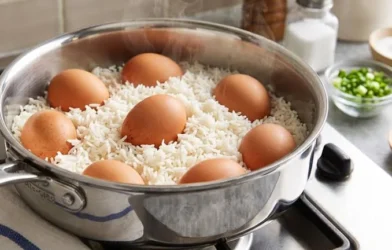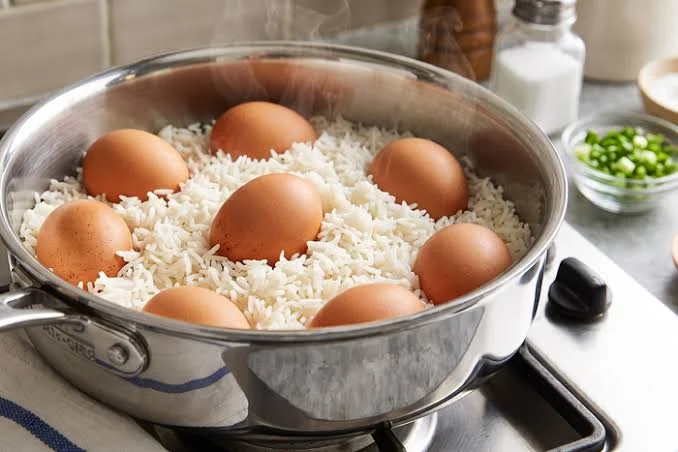
Registered dietitian-nutritionists have advised Nigerians to avoid cooking unpeeled eggs and rice together in the same pot, warning that the practice could increase the risk of cross-contamination and foodborne infections.
The warning comes as some households combine the two foods to save cooking time, water, utensils and fuel, particularly amid rising cooking costs.
Nutrition experts James Oloyede and Charles Oguikpe said bacteria that may be present on eggshells can potentially contaminate rice during the cooking process.
Risk of cross-contamination
Oloyede, a registered dietitian-nutritionist and former Director of Nutrition Services and Health Education at the Osun State Primary Health Care Development Board, explained that eggshells can carry bacteria such as Salmonella.
He said the risk becomes a concern when rice and eggs are placed in the same cooking water because rice begins absorbing water during the cooking process.
According to him, if contaminated material from an eggshell enters the cooking water, there is a possibility that it could come into contact with the rice.
He therefore advised households to cook the two foods separately as the safest approach to reducing the possibility of cross-contamination.
Cracked eggs can also affect rice
The nutritionist also pointed out that eggshells can sometimes crack while being boiled.
When this happens, portions of the egg white may escape into the cooking water and come into contact with the rice if both foods are being prepared together.
Apart from food-safety concerns, Oloyede said the leaked egg could affect the appearance, taste and odour of the rice.
He acknowledged that cooking both foods together may appear economical because it can reduce the amount of fuel and time required, but maintained that avoiding potential foodborne illness should take priority.
Salmonella and E. coli concerns
Oguikpe, another registered dietitian-nutritionist, also warned that contaminants on eggshells could be transferred to rice when the foods are cooked together.
He identified Salmonella and E. coli among the bacteria that could pose a concern and described the transfer of contaminants from one food to another as cross-contamination.
According to him, exposure to these bacteria can result in symptoms such as stomach cramps, diarrhoea and fever, while severe infections can lead to more serious complications.
He attributed possible contamination of eggshells to contact with poultry droppings and cautioned that washing eggs does not necessarily guarantee that all contaminants have been removed.
Experts recommend separate cooking
Both nutritionists advised Nigerians to prepare eggs and rice separately.
The recommendation is consistent with general food-safety guidance, which emphasises keeping foods that may carry harmful germs separate from other foods to prevent cross-contamination.
While cooking the two foods together may reduce fuel use in the short term, the experts said the potential cost of treating a foodborne infection, along with lost working time and reduced productivity, could outweigh the perceived savings.
They therefore urged households to prioritise safe food-handling and cooking practices when preparing meals.