

Fresh details have emerged about the individuals reportedly connected to an organisation that allegedly presented itself as a legitimate federal government agency and established structures across several Nigerian states as well as offices in the United States and China.
The controversy centres on the purported National Brands Development and Made-in-Nigeria Special Project Office, which has been described in reports as a fictitious government entity. The Independent Corrupt Practices and Other Related Offences Commission (ICPC) has also acknowledged reports concerning the alleged fake agency.
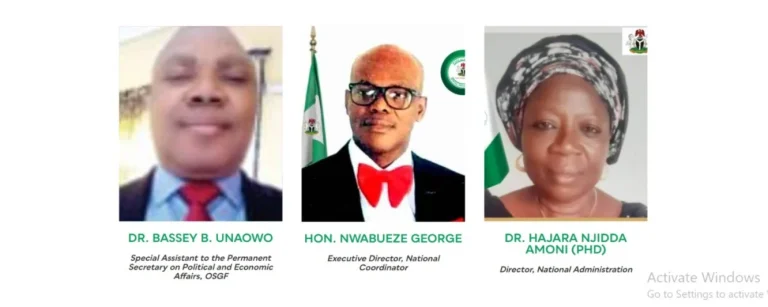
One of the names associated with the organisation is George Nwabueze, who was reportedly presented as its Executive Director and National Coordinator. Other individuals were said to have occupied positions described as zonal and state coordinators, suggesting that the organisation had developed an extensive administrative structure.
Reports indicate that the group claimed to have coordinators operating in about 20 states, while also presenting itself as having international representation in countries including the United States and China.
The development has raised concerns over how an organisation allegedly lacking legitimate federal government status was able to establish offices, appoint officials and operate under the appearance of an official government body for an extended period.
The controversy comes amid a broader scandal involving another alleged fictitious federal institution, the Presidential Foreign Intervention Promotion Council (PFIPC). That case has generated questions about the effectiveness of government verification and appointment procedures.
The Nigeria Civil Society Situation Room has called for an independent and comprehensive investigation into the fake-agency controversy, arguing that the matter raises significant questions about transparency, public appointments, institutional verification and accountability.
The organisation noted that authorities need to establish how purported appointment letters were generated, whether public institutions inadvertently recognised the entities and how alleged government-related activities could have continued without being detected.
In the PFIPC case, reports stated that the purported agency received a ₦1.3 billion allocation in the 2026 budget and was assigned office space within the Federal Secretariat in Abuja. The Presidency subsequently said the agency did not exist and that the individual claiming to head it was an impostor.
President Bola Tinubu subsequently directed the ICPC to investigate the controversy, while other government institutions also began examining aspects of the matter.
The latest revelations surrounding the alleged National Brands Development and Made-in-Nigeria Special Project Office have therefore added another layer to concerns about the impersonation of government institutions and the safeguards in place to prevent fraudulent organisations from operating as official agencies.
Authorities are expected to establish the identities and roles of those involved, determine how the organisation operated and ascertain whether any individuals or institutions facilitated or benefited from the alleged scheme.
Until the relevant investigations are concluded, claims against individuals linked to the organisation remain allegations and should not be treated as established criminal findings.