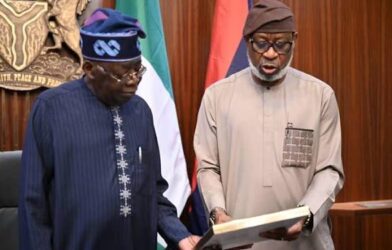



The hardship experienced by Nigerians since the removal of the fuel subsidy cannot be attributed solely to President Bola Ahmed Tinubu’s administration, according to Ademola Akinnola.
While the policy has brought serious economic difficulties for citizens, Akinnola argues that state governors and local government chairmen should also answer questions about how the additional funds available to them have been managed.
The removal of the petrol subsidy triggered a sharp increase in fuel prices, which subsequently pushed up transportation costs and the prices of food and other essential goods. The resulting inflation significantly reduced the purchasing power of many Nigerians and made daily life more difficult for households across the country.
Given these consequences, it is understandable that many citizens have directed their anger at the President.
However, Akinnola argues that the impact of the subsidy removal should be examined from a broader perspective.
According to him, the Federal Government’s justification for ending the subsidy was that the programme was consuming substantial public resources. Removing it, the argument went, would allow more money to flow to the three tiers of government.
The expectation was that states and local governments would use the additional revenue to improve infrastructure and public services, including roads, healthcare, education, water supply and electricity, while also meeting their obligations to workers and pensioners.
What Happened to the Additional Revenue?
Akinnola questions whether ordinary Nigerians have seen meaningful improvements in their communities since the increase in government revenue.
He points to persistent problems such as deteriorating roads, inadequate electricity, poorly equipped primary healthcare facilities and difficulties faced by some workers and pensioners.
For him, the central question is not simply how much money governments receive, but what they do with those resources.
He criticises what he describes as excessive spending, questionable projects, inflated contracts and the use of public resources for political purposes. He argues that money intended to improve the welfare of citizens should be channelled toward projects and programmes that have a direct impact on people’s lives.
The Responsibility of State and Local Governments
The argument therefore extends beyond the Federal Government.
If subsidy removal was partly intended to increase the resources available to states and local governments, Akinnola believes those administrations must also be held accountable for how they spend the funds they receive.
Citizens, he argues, should be asking their governors and local government leaders what has been achieved with the increased allocations and whether those resources are producing measurable improvements in their communities.
The debate over the subsidy removal, therefore, should not be reduced to whether President Tinubu alone should bear responsibility for the country’s economic difficulties.
The Lesson for the Tinubu Administration
Akinnola, however, does not completely absolve the President.
He argues that the administration should have anticipated the possibility that increased allocations might not automatically translate into better governance at the state and local government levels.
The writer believes the Federal Government should have considered stronger mechanisms for ensuring that the additional resources generated after subsidy removal were properly managed and converted into tangible benefits for Nigerians.
Ultimately, the subsidy debate raises a larger question about accountability across all levels of government.
While the Federal Government remains responsible for major national economic policies, state governors and local government chairmen also have a responsibility to demonstrate how public funds under their control are being used.
For Nigerians facing rising living costs, the real issue is not simply which level of government should take the blame. It is whether every level of government is doing enough to ensure that public resources translate into better living conditions for the people.