
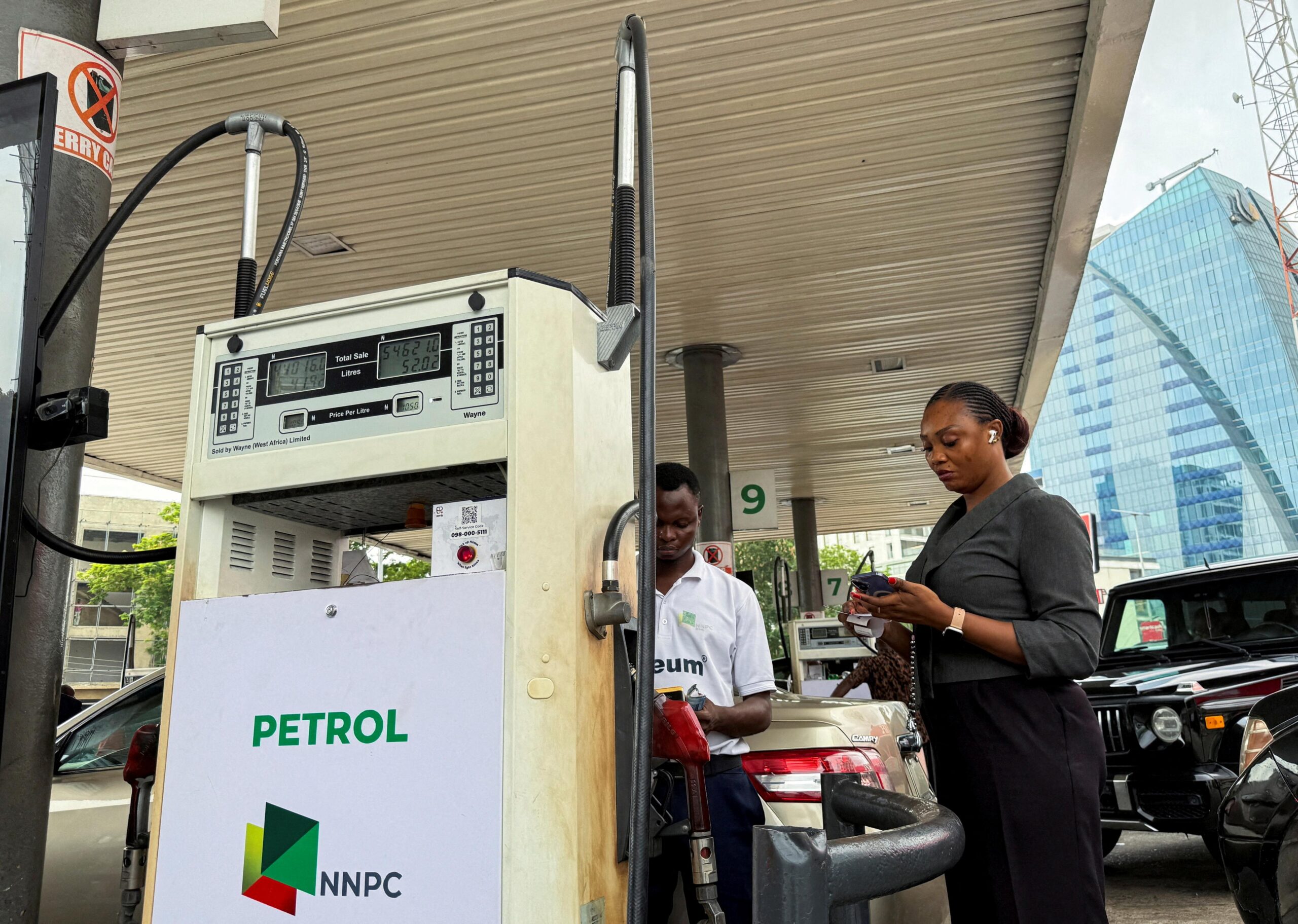
Nigerian motorists could see months of falling petrol prices reversed after the latest exchange of strikes between the United States and Iran reignited fears over global oil supply.
The US carried out a third round of strikes on Iran this week after Iranian forces attacked a commercial vessel in the Strait of Hormuz, a waterway that carries about a fifth of the world’s oil and gas trade. Iran responded by declaring the strait closed and launching missiles and drones at US allies across the Gulf.
The escalation pushed global crude prices sharply higher, unwinding weeks of declines that had allowed Nigeria’s Dangote Petroleum Refinery to cut pump prices four times since late May.
Dangote had reduced its ex-depot petrol price by a cumulative 200 naira per litre in the five weeks before the latest flare-up, bringing the price to 1,075 naira per litre by early July. Diesel and jet fuel prices had also fallen over the same period.
The refinery has said its pricing reflects the cost of crude bought weeks or months earlier, rather than daily market moves. That means the benefits of cheaper cargoes take time to reach consumers, but it also means a fresh price spike now could show up at Nigerian pumps in the coming weeks, even if global prices later ease again.

Nigeria’s benchmark crude grade, Bonny Light, has traded well above international benchmarks at points this year, reaching close to 120 dollars a barrel during earlier phases of the conflict. As a major oil exporter, higher prices would normally boost government revenue.
However, actual production has remained below the government’s target of 1.84 million barrels a day for much of 2026, running closer to 1.4 to 1.5 million barrels instead. Officials have pointed to pipeline damage, ageing infrastructure and years of underinvestment in the Niger Delta as key factors behind the shortfall.
The gap means Nigeria has not been able to fully capitalise on periods of high prices, even as it remains exposed to price shocks through its continued reliance on imported refined fuel to meet domestic demand.
Nigeria’s 2026 budget was set using a conservative crude price benchmark of 60 dollars a barrel, a figure lawmakers lowered specifically to account for volatility linked to conflicts in the Middle East and Europe. The exchange rate was set at 1,512 naira to the dollar for the year.
The conservative benchmark means the government has not been budgeting for a windfall from higher oil prices, even during periods when Bonny Light has traded well above that level.