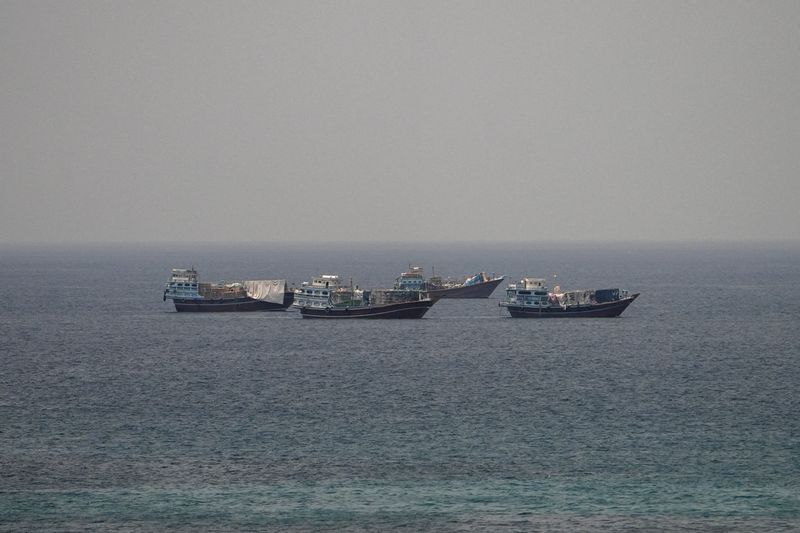
The Strait of Hormuz has become the flashpoint of a renewed exchange of strikes between the United States and Iran, with both sides giving conflicting accounts of whether the critical oil route remains open.
Iran’s Revolutionary Guards declared the waterway closed on Sunday, following days of escalating attacks that began after Iranian forces struck a commercial ship using what Tehran called an unapproved route through the strait. The United States, however, has repeatedly insisted the strait remains open, saying its forces are positioned to keep the waterway free for international traffic.
The latest confrontation began when Iranian forces attacked the MV GFS Galaxy, a Cyprus-flagged container ship, causing serious damage to its engine room and forcing the crew to abandon ship. One Indian sailor remains missing, according to authorities in New Delhi, while Oman said it rescued 23 crew members from a separate vessel. US Central Command described the attack as deliberate, while Iran said it had fired warning shots at ships it accused of ignoring instructions to use an approved corridor.
In response, the US carried out its third round of strikes on Iran this week, hitting around 140 targets including missile and drone sites, communication networks and coastal surveillance positions. Explosions were reported in several Iranian cities, including Bandar Abbas and Jask, with one soldier reported killed. US Secretary of Defense Pete Hegseth said Iran had made a costly mistake in continuing its attacks on shipping
President Donald Trump said the strikes came just hours after the two countries appeared close to reaching a new agreement, only for Iran to target a ship shortly afterward.
Iran’s response extended further than in recent weeks, striking US bases and allies across the region. The Revolutionary Guards said they hit a US base in Jordan and targeted facilities in Oman, a country that has largely stayed out of the direct line of fire during the conflict. Oman summoned Iran’s ambassador in protest, a rare diplomatic rebuke from a country that has tried to remain neutral between Washington and Tehran.
Qatar, the United Arab Emirates, Kuwait and Bahrain also reported being targeted by Iranian missiles or drones. Qatar confirmed three people were injured, the UAE said an incoming missile threat did not ultimately reach its territory, and Jordan confirmed three Iranian missiles landed within its borders.
The clashes have placed a month-old ceasefire agreement under serious pressure. Trump has said the truce is effectively over, though he has left the door open to further negotiations. Iran’s foreign minister has accused the US of breaching the terms of the deal, while Iran’s top negotiator, Mohammad Bagher Ghalibaf, warned that Tehran would no longer accept what he described as one-sided arrangements.
Pakistan, acting as a mediator, urged both sides to pursue dialogue rather than further escalation, with its foreign minister saying diplomacy remained the only viable path to lasting peace.
US Central Command has continued to state publicly that the strait is open and that traffic is flowing, pointing to the volume of vessels it says have transited the waterway in recent days. Iran maintains the opposite, saying passage will remain restricted until American operations in the region end.
With both sides trading strikes and neither backing down on their competing claims over the strait, the coming days are likely to determine whether the ceasefire can be salvaged or whether the conflict enters a more sustained phase.