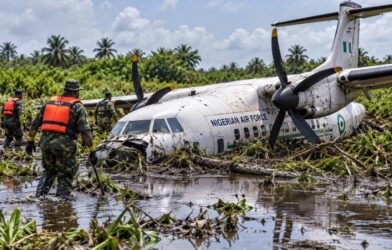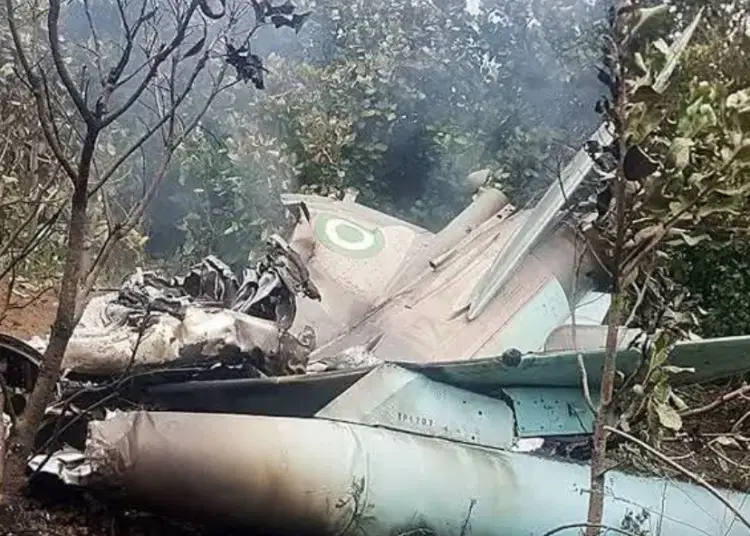
The Nigerian Air Force (NAF) has commenced a comprehensive investigation into the crash of its ATR-42 aircraft in Igbokoda, Ondo State, as recovery teams continue efforts to locate the submerged wreckage and recover the remains of victims.
The aircraft crashed in a swampy area near the Naval Base in Igbokoda, Ilaje Local Government Area, on Monday while on a routine mission from Benin to Lagos. The NAF later confirmed that all 25 people on board died in the incident.
A military source said a board of inquiry had been activated following the crash, with the Superintendent of Standards and Evaluation traditionally responsible for heading the investigation.
However, NAF spokesman, Air Commodore Ehimen Ejodame, said the Chief of Air Staff, Air Marshal Sunday Kelvin Aneke, had ordered a comprehensive investigation in line with established procedures. He added that the outcome would be made public after the preliminary findings are completed.
Recovery operations have been complicated by the difficult swampy terrain where the aircraft came down. Specialised equipment, including amphibious machinery, divers and sonar technology, has been deployed to help teams locate and retrieve the submerged aircraft.
The Nigerian Navy has also deployed sonar equipment from its Hydrographic Department to obtain an underwater picture of the area and assist the recovery operation.
Meanwhile, the Federal Government has moved to deepen cooperation between civil and military aviation authorities following the tragedy.
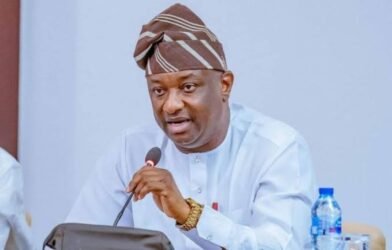
Minister of Aviation and Aerospace Development, Festus Keyamo, and the Chief of Air Staff agreed to strengthen collaboration in areas including airworthiness, certification, training and capacity building.
Keyamo said the incident had highlighted the importance of closer coordination between the Nigerian Civil Aviation Authority (NCAA) and the Nigerian Air Force, noting that both sectors had a shared responsibility to protect lives.
He disclosed that a joint framework involving the NCAA and NAF would be developed to improve technical cooperation and safety standards. Air Force personnel would also be given opportunities to participate in relevant training programmes organised by civil aviation authorities.
The Chief of Air Staff welcomed the initiative, saying stronger cooperation between the civil and military aviation sectors would help raise professional standards and improve aviation safety across the country.
The crash has also renewed calls for a wider examination of the condition, maintenance and operational history of military aircraft in Nigeria, with security expert and former DSS director Mike Ejiofor urging authorities to look beyond the immediate cause of the incident.
President Bola Tinubu had earlier directed the Nigerian Air Force to conduct a thorough investigation into the crash and determine its cause to prevent similar incidents in the future.