

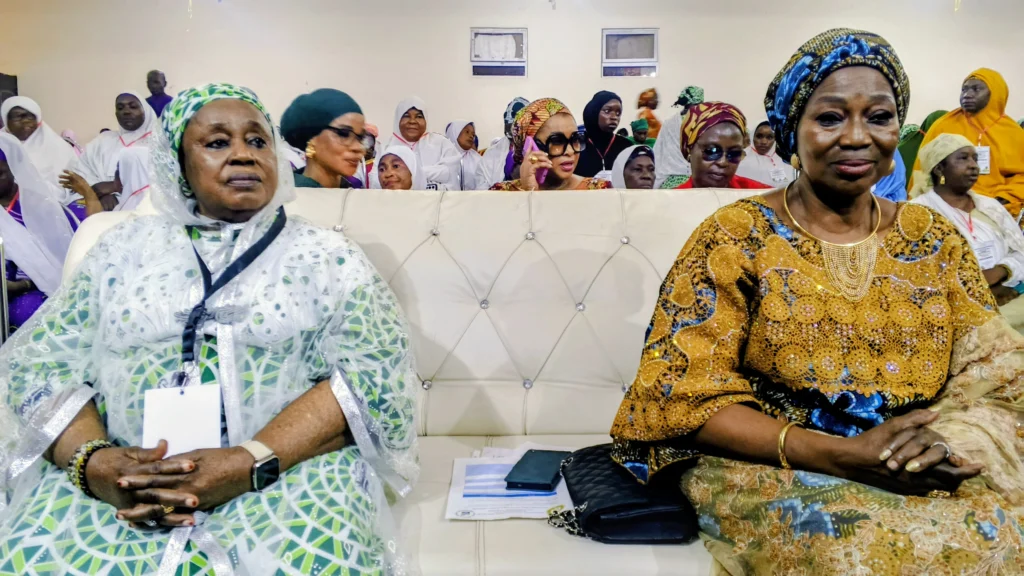
Nigeria’s First Lady, Senator Oluremi Tinubu, has called on government institutions and community leaders to take practical steps towards improving the welfare of rural women and ensuring their concerns are reflected in development policies.
She made the appeal at a symposium held in Abuja to mark the 2026 International Rural Women’s Day. The event was organised by the Association of Wives of FCT Traditional Rulers (WOFCTTRA), in partnership with the Federal Capital Territory (FCT) Women Affairs Secretariat.
The symposium focused on how wives of traditional rulers could use their grassroots influence to promote gender equality, peacebuilding and sustainable development in rural communities.
Represented by Mrs Hilmary Aipoh, a former All Progressives Congress (APC) women leader in the FCT, Tinubu praised rural women for their resilience and contributions to society.
She urged members of WOFCTTRA to translate their influence into meaningful interventions that would expand opportunities for women and help build more inclusive communities.
According to her, appreciating rural women should go beyond public recognition to include practical measures that improve their economic prospects, protect their rights and strengthen their participation in decision-making.
Rural Women Face Barriers to Essential Services
The First Lady highlighted the important roles women play in agriculture, trading, crafts, caregiving and the preservation of cultural heritage.
Despite their contributions, she noted that many rural women continue to face obstacles in accessing education, healthcare, land ownership, financial services and leadership opportunities.
She called for stronger collaboration among traditional institutions, government agencies and community organisations to address these challenges.
Tinubu also encouraged wives of traditional rulers to use their relationships with market associations, women’s groups and young people to communicate community needs to those in positions of authority.
She said their grassroots connections could help ensure that government policies better reflect the everyday realities of rural families.
Traditional Institutions Urged to Promote Gender Equality
The First Lady described traditional rulers as important custodians of culture and social harmony, adding that their wives were strategically positioned to influence positive change within their communities.
She encouraged them to promote girls’ education, discourage harmful traditional practices and support women’s involvement in community affairs.
She also emphasised the importance of peacebuilding, urging community leaders to use their influence to resolve disputes and encourage peaceful coexistence.
The initiative, she said, should help create communities where women and girls have greater opportunities to thrive and contribute to development.
WOFCTTRA Seeks Targeted Support for Rural Women
Earlier, Hajiya Hauwa Adamu, President of WOFCTTRA and Queen of Abaji Chiefdom, called for targeted interventions to improve the welfare and safety of rural women across the FCT.
Adamu stressed that rural communities should not be overlooked in development planning, noting that women in these areas play essential roles in agriculture, family welfare and local economic activities.
She proposed establishing Rural Women Safe Motherhood Clubs across the FCT’s six area councils to improve support for maternal health.
She also advocated a Palace-Based Peacebuilding Network that would help women report gender-based violence and access community-based mediation.
In addition, she called for stronger cooperation with the Renewed Hope Initiative to ensure rural women benefit from relevant empowerment programmes.
Adamu further proposed creating an official Rural Women Traditional Institution Desk within the FCT to help channel concerns raised in traditional palaces to government authorities.
She explained that traditional institutions often serve as accessible points of contact for women experiencing domestic disputes, health emergencies and challenges involving their children’s education and safety.
FCT Government Reaffirms Commitment
The Permanent Secretary of the FCT Women Affairs Secretariat, Hajiya Asmau Mukhtar, reaffirmed the administration’s commitment to improving rural women’s welfare, livelihoods and economic opportunities.
She acknowledged their contributions to food security, entrepreneurship, family wellbeing and community development, assuring participants that their needs would remain part of the territory’s development agenda.
The symposium reinforced calls for stronger partnerships between government, traditional institutions and civil society groups to expand opportunities for rural women and promote lasting community development.
Stakeholders stressed that sustained progress would require practical interventions that improve access to essential services, strengthen economic independence and give women a meaningful voice in decisions affecting their lives.


