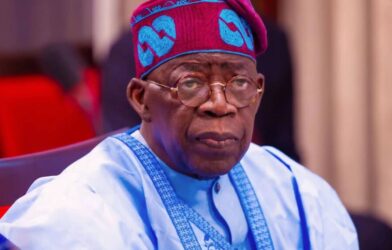

Paul Ibe, media adviser to former Vice-President Atiku Abubakar, has questioned whether President Bola Ahmed Tinubu complied with the constitutional procedure governing a president’s absence from Nigeria while on vacation.
Ibe raised the issue following the Presidency’s announcement that Tinubu had extended his ongoing “working vacation.”
In an opinion article, he referred to Section 145 of the Nigerian Constitution, which provides for a written declaration by the President to the Senate President and Speaker of the House of Representatives when the President proceeds on vacation or is otherwise unable to perform the functions of the office.
According to Ibe, the provision also stipulates that the Vice-President assumes presidential functions as Acting President until the President transmits a declaration to the contrary.
The presidential aide argued that the Constitution does not specifically establish a category known as a “working vacation,” noting that the State House had initially described Tinubu’s August 30 departure as a three-week annual vacation.
Ibe said the Presidency later announced an extension of the President’s stay abroad, raising questions about whether the constitutional requirements had been followed.
Representation and Acting Presidency
The article also distinguished between representing the President at official events and formally performing presidential functions as Acting President.
Ibe acknowledged that there was nothing inherently unusual about Tinubu communicating with government officials while abroad or having senior officials represent him at public engagements.
He, however, argued that Section 145 specifically identifies the Vice-President as the person who assumes presidential functions in the circumstances covered by the provision.
The issue became more significant, he said, after Vice-President Kashim Shettima travelled to New York for the United Nations General Assembly, with Secretary to the Government of the Federation George Akume reportedly representing the President at some official events.
Ibe questioned whether such representation should be regarded as equivalent to the constitutional role of Acting President.
Reference to the 21-Day Provision
Ibe also drew attention to Section 145(2), which provides that if the President fails to transmit the required written declaration within 21 days, the National Assembly may, through resolutions supported by a simple majority of both chambers, mandate the Vice-President to perform the functions of President as Acting President.
He argued that the provision should not be interpreted as granting the President an automatic 21-day period to remain on vacation without complying with the earlier requirement.
According to Ibe, the central questions are whether Tinubu transmitted the constitutionally required declaration and, if so, whether the Presidency can confirm that fact.
He further asked what position the National Assembly would take regarding its constitutional responsibilities if the required declaration was not transmitted within the stipulated period.
Lessons From Nigeria’s Past
Ibe referenced the controversy surrounding former President Umaru Musa Yar’Adua’s prolonged absence from office, arguing that the experience highlighted the importance of clarity over the exercise of presidential authority.
He said subsequent constitutional changes were intended to provide clearer procedures for dealing with temporary presidential absences.
While acknowledging that Tinubu has the right to travel and take his vacation, Ibe maintained that communication with government officials from abroad should not be viewed as a substitute for any constitutional procedure that may apply.
He concluded by urging the administration to clarify the constitutional position surrounding the President’s extended vacation.
The arguments are Ibe’s interpretation of Section 145 and the circumstances surrounding Tinubu’s absence; the constitutional implications ultimately depend on the applicable legal interpretation and the specific facts concerning any declaration transmitted by the President.