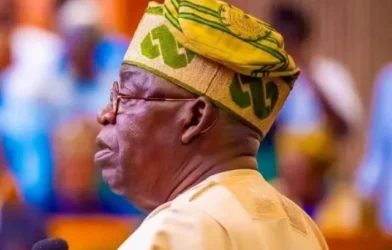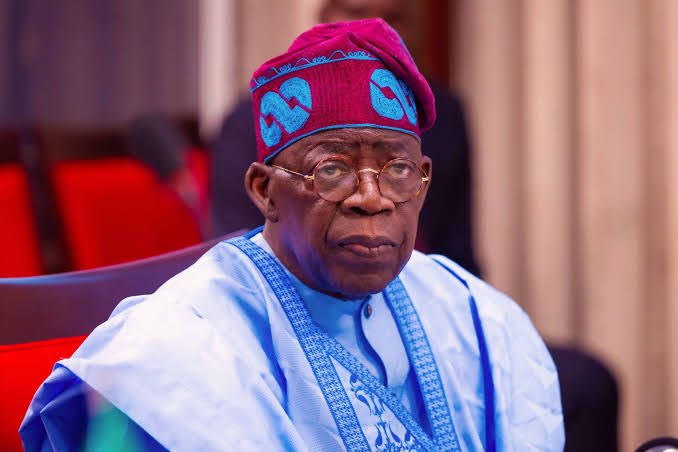
President Bola Ahmed Tinubu’s decision not to attend every campaign event ahead of the 2027 general elections has sparked debate over leadership, public accountability and direct engagement with voters.
In an opinion article, Festus Adedayo examines the President’s announcement that he would limit his campaign appearances to focus on governance, questioning whether delegating campaign activities to party leaders and political allies could weaken the relationship between the President and the electorate.
Tinubu reportedly made the announcement during the inauguration of the All Progressives Congress (APC) Presidential Campaign Council in Abuja, explaining that the responsibilities of his office would require him to prioritise governance rather than travel extensively during the campaign.
Adedayo argues that presidential campaigns should provide an opportunity for candidates to engage directly with citizens, explain their policies and respond to concerns about the administration’s performance.
He maintains that while campaign councils and party officials play important roles in electoral mobilisation, they cannot entirely replace the President’s direct interaction with voters.
According to the columnist, Nigerians should have opportunities to question the President about issues such as rising living costs, economic reforms, insecurity and other challenges affecting their daily lives.
Adedayo also questions whether the decision to limit campaign appearances could shield the President from direct public scrutiny at a time when the administration’s record is likely to feature prominently in electoral debates.
Historical Comparisons
The writer draws parallels between Tinubu’s proposed campaign strategy and the approach adopted by former Nigerian President Shehu Shagari during the 1983 general election.
He argues that Shagari’s reliance on influential party figures to campaign in different regions contributed to perceptions of a presidency disconnected from public dissatisfaction.
Adedayo also references former United States President Jimmy Carter’s 1980 re-election campaign, during which Carter placed greater emphasis on presidential duties and spent considerable time at the White House.
Carter subsequently lost the election to Republican candidate Ronald Reagan. The columnist uses the comparison to highlight the potential political consequences of limited direct engagement with voters, although the outcome of an election is shaped by several factors.
The Chichidodo Analogy
A central theme of the article is the chichidodo, a fictional bird described in Ayi Kwei Armah’s novel The Beautyful Ones Are Not Yet Born.
The bird despises filth but feeds on maggots that thrive in it, creating a contradiction between what it rejects and what sustains it.
Adedayo applies the metaphor to political leadership, arguing that leaders who distance themselves from difficult realities while benefiting from the existing political system risk appearing inconsistent.
He suggests that delegating public engagement to political allies could create a barrier between the President and the citizens whose votes gave him the mandate to govern.
The columnist further argues that transparency should extend beyond financial matters to include openness about leadership responsibilities and the challenges facing those in public office.
Questions Over Leadership and Public Engagement
Adedayo concludes that direct engagement between elected leaders and citizens is an important part of democratic accountability.
He contends that voters should have the opportunity to hear directly from the President about his administration’s achievements, shortcomings and plans for the country.
As the 2027 elections approach, the debate over Tinubu’s campaign schedule raises broader questions about how political leaders balance the demands of governance with the responsibility to seek renewed public support.
Ultimately, the article presents direct communication with voters as an important test of political accountability, arguing that campaign surrogates cannot fully replace the personal responsibility of a presidential candidate to address the electorate.