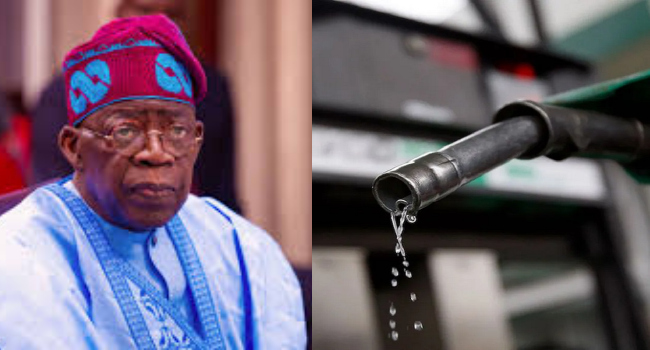
The International Monetary Fund (IMF) has advised President Bola Tinubu’s administration against bringing back a general petrol subsidy, urging the Federal Government to provide direct assistance to Nigerians most affected by rising fuel and transportation costs.
The global financial institution warned that a blanket subsidy could place additional pressure on government finances while offering disproportionate benefits to wealthier consumers rather than low-income households struggling with the high cost of living.
The IMF’s Director of Fiscal Affairs, Rodrigo Valdés, gave the advice on Wednesday during a briefing on the fund’s Fiscal Monitor at the 2026 annual meetings of the IMF and World Bank Group in Bangkok, Thailand.
IMF Recommends Targeted Support for Vulnerable Nigerians
Valdés made the remarks in response to concerns that allowing petrol prices to reflect market conditions could increase transport fares, fuel inflation and worsen poverty in Nigeria.
With pressure mounting for the government to reconsider petrol subsidy removal ahead of the 2027 general elections, he acknowledged the political difficulties associated with rising energy prices.
However, he maintained that protecting citizens from economic hardship should not necessarily mean keeping fuel prices artificially low.
According to him, governments would achieve better results by strengthening social protection programmes and using reliable household data to identify people who genuinely require financial assistance.
Valdés also disclosed that fuel subsidies and other measures preventing energy prices from responding fully to market conditions had cost countries between one and 1.5 per cent of their gross domestic product in 2026.
He explained that such interventions could discourage consumers from adjusting their fuel consumption when supplies become limited, while placing additional demands on public resources.
IMF Official Suggests Alternative Relief Measures
Davide Furceri, a division chief in the IMF’s Fiscal Affairs Department, recommended alternative measures to cushion the effects of higher energy costs.
These include subsidising public transportation, expanding school feeding programmes and providing assistance to vulnerable farmers.
He argued that governments could redirect money spent on broad fuel subsidies towards households and groups facing the greatest economic difficulties.
The IMF also stressed that relief measures should be carefully targeted and temporary to ensure that limited public funds reach those who need them most.
Federal Government Introduces Petrol Discount
Meanwhile, the Federal Government has introduced a 30-day petrol discount at Nigerian National Petroleum Company Limited (NNPC Ltd) retail outlets as part of efforts to ease the impact of rising fuel prices.
Public transportation operators are being prioritised under the arrangement.
Finance Minister Taiwo Oyedele has maintained that the initiative does not amount to a return to the former petrol subsidy regime, explaining that NNPC Ltd would forgo its retail profit margin rather than receive a conventional subsidy payment.
The government has also proposed negotiating a petrol price ceiling of ₦1,350 per litre, subject to monthly reviews.
The developments have renewed debate over how the government can reduce the financial burden on Nigerians without undermining public finances.
The IMF’s latest position reinforces its preference for targeted social assistance over universal fuel subsidies as Nigeria continues to navigate economic reforms and rising living costs.